The first thing you notice watching Kansas basketball this season is who’s not there. That would be Perry Ellis, the Jayhawks’ leading scorer the last two seasons and the punchline to a million jokes about how long one player could stay in college.
Kansas basketball is winning big by going small
Kansas has embraced modern basketball and they look unstoppable because of it.

Photo by Jonathan Daniel/Getty Images

Ricky O'Donnell has covered basketball at all levels for more than a decade at SB Nation. He’s currently the Associate Director of Programming.
Ellis was the rock in Bill Self’s frontcourt, a traditional power forward who thrived in the post and eventually developed a dependable jump shot. For all of his offensive skill, Ellis was rarely strong enough defensively to be the lone big man on the floor. Self paired him with a rotating cast of athletic centers, from Cliff Alexander to Jamari Traylor to Cheick Diallo to Landen Lucas.
With Ellis, Self was able to play the way he always had: inside-out with a two-post offense that emphasized paint touches. Without him, Self has had to adapt. The result is a four-guard look that’s fully embraced the tenet of modern basketball. To watch Kansas this season is to see a spread floor, shooters everywhere, and athletes given the freedom to make plays in space.
It’s impossible to argue with the results: The Jayhawks have won 17 straight games since a season-opening loss to Indiana thanks to the best offense of Self’s 14-year stay at the program. The Jayhawks are putting up an offensive rating of 121.9, shooting 41.3 percent from three-point range and scoring more efficiently in transition than any team in the country.
It starts with the twin point guard attack of Frank Mason and Devonte’ Graham. Self might be known for pulling five-star recruits, but he’s hit the jackpot with two sleepers. Mason was once committed to Towson, while Graham was signed with Appalachian State. Now Mason might be the national player of the year while Graham is drawing NBA attention for his rock-solid two-way game.
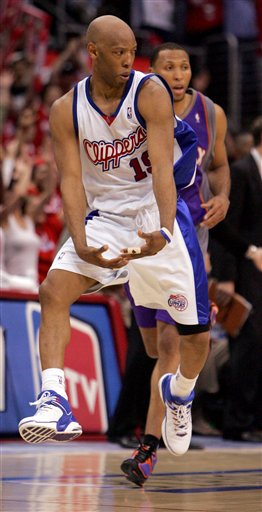
Mason has been scalding all year: his 20.3 points per game are the most a player has ever averaged under Self at Kansas. He’s shooting the hell out of the ball (53.8 percent from three), averaging more than five assists per game, and has developed a penchant for taking and making big shots. Think of him as the player most likely to do the Sam Cassell Big Balls Dance in the NCAA tournament.
Graham would be the unquestioned leader on about 345 other teams. He excels pressuring the ball defensively, can score from all three levels and rarely turns the ball over. As Luke Winn noted in a great profile at Sports Illustrated, the last four national title winners have started two point guards and KU may very well keep the streak going.
For as good as Mason and Graham are, small ball works for Kansas because of wing depth. Namely, the development of Svi Mykhailiuk and Lagerald Vick.
Mykhailiuk has been on the radar the last two seasons since arriving at Kansas from the Ukraine as a 17-year-old. He struggled to find rotation minutes until this year, when he’s blossomed into the 6’8 knockdown three-point shooter he was always purported to be. As a junior, Svi is averaging 10.9 points per game by shooting 43.5 percent from three. Even with two full college seasons under his belt, he’s still four months younger than Kansas’ top freshman Josh Jackson (more on him in a second).
Vick’s ascent has been just as impressive. The No. 51 recruit out of the class of 2015, Vick is another 40 percent three-point shooter who can get out in transition and give Self lineup versatility.
Tying it all together is Jackson, the mega-recruit freshman who is filling up the box score every night for the Jayhawks. Jackson is a top-flight athlete, a gifted passer and an unmatched competitor. Considered a shooting guard as a recruit, Jackson has been playing the four almost exclusively for Kansas. When surrounded by shooters, he’s been able to make plays in space for himself and others.
The question is whether Self has fully welcomed four-out basketball into his life or if this change happened because of personnel. Kansas doesn’t have much post depth this year, with Lucas holding the fort as a rebounder and interior defender in the middle and Carlton Bragg finishing out the rotation when he goes to the bench. Udoka Azubuike’s injury didn’t help.
Still, it isn’t hard to imagine Self playing Lucas and Bragg together in the recent past. As a McDonald’s All-American, Bragg was a more touted recruit than Mykhailiuk or Vick. Jackson is a natural on the wing and the Mason-Graham combo solidified the backcourt.
Instead, Self has unlocked Jackson by matching him with slower defenders at the four and surrounding him with shooters. It works because he recruited wing depth with Mykhailiuk and Vick. Where Brannen Greene and Andrew White before them couldn’t get on the floor, Mykhailiuk and Vick are now an essential part of the mix.
The only issue for Kansas is whether Lucas is strong enough defensively to hold down the fort inside by himself. Self played him over more talented players like Alexander and Diallo for the last two years, so he certainly has experience heading into March.
It’s easy to see why Self was hesitant to stray from his old two-post formula. How can you argue with 12 straight Big 12 titles? Small ball must have required a leap of faith from Self, but it’s paying off in a big way right now.
For as gaudy as Ellis’ numbers were, Kansas never made it past the Elite Eight with him. That’s fine for almost every other program, but not KU. With a new small-ball approach, Kansas is thinking bigger this year. Don’t be surprised if it takes them all the way.
See More: