The most intriguing thing about the Utah Jazz over the past two seasons is that the team had four starting-level big men on the roster: strong veterans Al Jefferson and Paul Millsap, and top-3 picks Enes Kanter and Derrick Favors. Most teams with Kanter and Favors would find it impossible not to start one of them; most teams don't have a Jefferson and a Millsap. This was the strongest of roadblocks for two young bigs learning the NBA game, especially considering one (Favors) had only a year of college and the other (Kanter) didn't even really have that.
Jazz preview: Derrick Favors and Enes Kanter have their spotlight now
Jazz fans have been waiting for two years for Derrick Favors and Enes Kanter to take over the team’s frontcourt. With Al Jefferson and Paul Millsap playing elsewhere, now’s the time for the young duo to justify their team’s faith.

Steve Mitchell-USA TODAY Sports
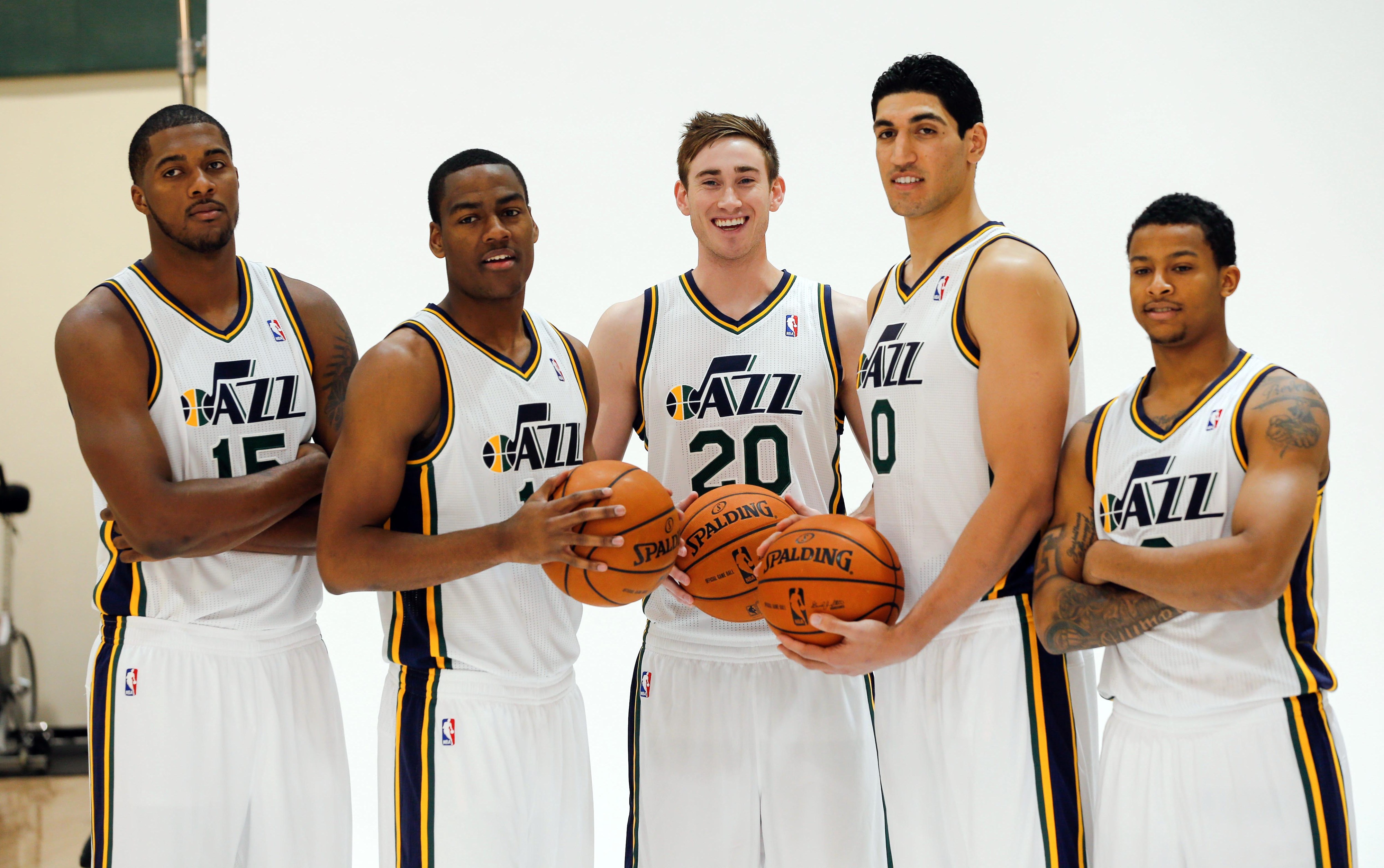
But they got to practice against Jefferson and Millsap (and each other). Now we see what that and reserve minutes in the NBA were worth, because Millsap and Jefferson both departed for the southeast in the offseason. It is now the frontcourt of Kanter, 21, and Favors, 22. As far as promising frontcourts go, you can’t get much more exciting than this one.
Yet the potential of youth comes with uncertainty and the prospect of disappointment. The passionate fans of Salt Lake have been waiting for frontcourt liberation for a couple of years now; if it goes south, it’ll be even more painful given the high hopes.
Can Kanter and Favors make the leap from good reserves to good starters? That usually depends on how players fare per-minute and per-possession: the Paul Millsap Doctrine states that players who do well in reserve roles can usually replicate their production in larger roles. (Millsap, he's everywhere!) Favors's per-minute numbers are solid: he scores about 15 points per 36 minutes on moderate shooting, and adds 11 rebounds and 2.6 blocks. The shooting percentages are an orange flag -- a big man with a normal usage rate (20 percent) should shoot better than an effective field goal percentage of .482; Favors is barely more efficient than DeMarcus Cousins, who has a disgustingly high usage rate. The red flag on Favors is a crazy high foul rate: he averaged five fouls per 36 minutes last season. Usually things calm down by a big man's third season. For Favors, they did not. That's a problem, especially considering that Favors's best gifts are at the defensive end. You need your defensive anchor on the floor. Such a high foul rate prevents that.
 Visit SLC Dunk for even more Jazz coverage.
 Kanter isn’t the potential defensive or rebounding force that Favors can be, but in many ways the Turk’s future looks brighter. He’s a stronger and more efficient scorer (16.9 per 36, .545 eFG), averages fewer than a foul every nine minutes and is an excellent offensive rebounder (capturing 14.5 percent of opportunities.) He didn’t rebound well defensively last season, he’s about as likely to pick up an assist as, well, Al Jefferson and, again, he’s not a top defender. In many ways, he’s a reminder of Jefferson and Millsap, whereas Favors breaks the mold.
Few teams are ever blessed with more than one great big man. But few teams get an opportunity to pick up the quality of assets as Utah did with the Deron Williams trade. (Favors and the pick that become Kanter came over in that deal.) The Jazz have shown how having two high-quality players up front can have a inordinately positive impact; Utah barely missed the playoffs in 2012-13 despite a really uneven depth chart at point guard, two-guard and small forward. With Trey Burke positioned as the team's point guard of the future, and Gordon Hayward and Alec Burks in place, Utah has a lot of promise ... if Favors and Kanter deliver.
There’s nothing in their way now.
See More:


