There are several players whose value seems to be a recurring topic of debate lately; I hear a wide range of opinions about players like Tyler Bozak, Devan Dubnyk, and Steve Mason.
Track record vs. hot streaks: How quickly should we change opinions on players?
How quickly can a player’s performance change your opinion of him?

What they all have in common is that their recent performance is quite different from their career average. I think that how much weight people give the recent past is one of the biggest divides in player evaluation today.
Some people put a heavy weight on what they’ve seen most recently; when a player’s performance changes, their perception of the player changes with it. Others are more skeptical, wanting to see a sustained level of performance before they sharply change their opinion.
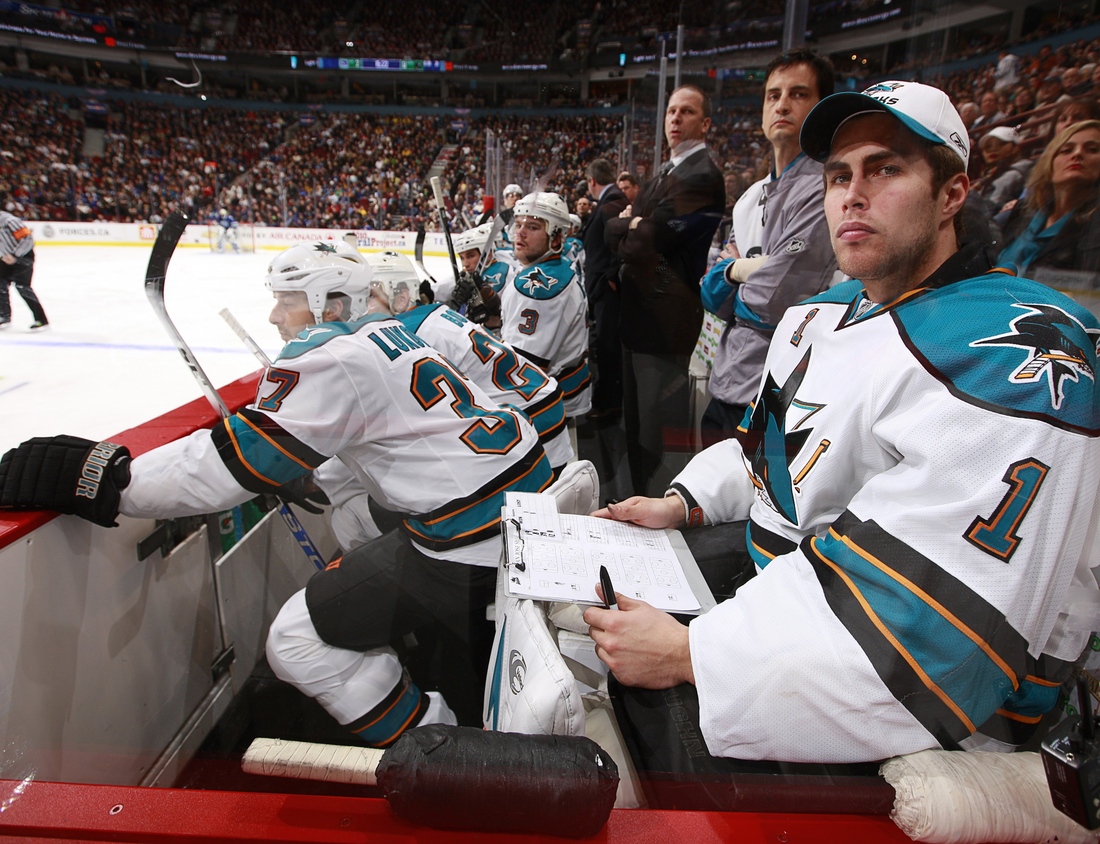
Rightly or wrongly, the responsive group is much more likely to want a hot goalie to keep getting starts, or to add a player on a five-game point streak to their fantasy lineup. The inertial group is more likely to ask whether a player (Erik Karlsson, Matthew Lombardi, Scott Hartnell) is really as good as he looked in the previous year or whether it was "just a career year."
This isn’t really an argument about the value of stats.
Analytics do provide a strong argument for the more inertial approach in most cases. We can calculate what size fluctuations we should expect by random chance, and for most metrics it tends to be more than people imagine. Moreover, we can show that some metrics are more variable than others and use that to suss out whose improvements are more likely to be sustained going forwards.
But this isn’t inherently an argument about stats. You don’t need analytics to say something like “Steve Mason has been pretty terrible for a long time; I want to see more than a couple months of good play before I’ll be a believer.”
All you need is the memory of how prolonged success did not follow the single great year posted by Rick DiPietro, Pascal Leclaire, Brian Elliott, Mike Smith, Byron Dafoe, Andrew Rayrcroft, or Dan Ellis.
You don’t need analytics to say something like “with only 134 points in 238 previous games, I want to see more than 23 points in 26 games before I’m getting excited about Tyler Bozak’s scoring ability.”
You just need to remember that Colby Armstrong once had 29 points in 26 games or that Guillaume Latendresse and Brett McLean each have had 25 points in 26 games or that Jarret Stoll once had 31 points in 26 games or that Peter Mueller had 26 points in 26 games at age 19 or that Ville Leino had 21 points in 19 playoff games.
I don’t mean to imply that we know for sure that the players won’t sustain their current pace. Some players really do take a sharp step forwards at some point, of course. But there are an awful lot of cautionary tales out there suggesting that we shouldn’t necessarily assume that a brief run of strong play is a clear indicator of what a player will do going forwards.
It’s perfectly reasonable for a Flyers or Leafs fan to hope that Mason or Bozak will continue their current run, but it’s probably unfair to expect it, and the teams would be making a mistake if they planned on it.
More from SB Nation NHL:
• Olympics: Injuries might alter Canada’s roster | USA roster analysis
See More:


