In the last three collective bargaining agreements, the NBA has taken the sting out of the worst contracts. In 1998, the league capped peak individual salary and annual raises. Future deals shrunk the maximum length of deals, further contracted raises and made exceeding the salary cap by large amounts more painful. There are also some salves: We’ve had two amnesty clauses in 10 years, and the new stretch provision allows teams (in theory) to recover from a bad signing by stretching the cap hit over multiple years.

Geoff Burke-USA TODAY Sports
But something the tighter salary cap and more punishing luxury tax have also done is made every dollar in a team’s cap figure more scarce, more valuable. When you can’t pay away the damage painlessly, you need to better manage your cap sheet. Mistakes are, in a way, magnified. One bad move with a mid-level deal and you’re at a real disadvantage, because throwing money at the problem isn’t as effective.
 A daily column on the NBA.1/31: Kyrie isn't leaving anytime soon
1/30: How to properly judge All-Stars
1/28: Cap space isn't always good
1/27: Salary limits: Institutionalized collusion?
1/24: Wins don't make the All-Star
1/13: There's no right way to win
1/17: NBA teams are playing faster
1/15: Lakers picked a good year to stink
That's what makes the specter of free agents like Trevor Ariza and Rudy Gay so terrifying.
Ariza will be a free agent in July, having completed a five-year, $34 million deal that was never really worth it until this season. The Rockets signed Ariza to the contract after he had a rollicking good playoff run with the Lakers in 2009. At that point, he looked like a strong foundational piece, an athletic wing defender who could disrupt opponents and hit threes on the other end. He famously thrived under Kobe Bryant's tutelage and soaked up Phil Jackson's lessons.
Things didn't go well from there. In Houston, he took a ton of threes and shot poorly. He was jetted off to New Orleans for Courtney Lee, and again to Washington in the Emeka Okafor deal. How much faith did Washington have in Ariza going into this season? They re-signed Martell Webster to a fairly substantial deal and drafted Otto Porter. That doesn't sound like much.
But a crazy thing happened this season: He's playing wonderfully! At this point, that old joke about certain players and contract years is unavoidable with Ariza. It's hard to imagine the Wizards (now 23-23 and challenging for home court in the first round) doing so well without him, especially considering Washington's strength is defense (No. 8 in the NBA). Ariza has started 41 games, and on Saturday led the charge in not only slowing down Kevin Durant (8-21 shooting, 0-6 on threes, five turnovers) but in putting points on the board for the Wizards (team-high 18). In fact, he's third on the team in per-game scoring and sixth in per-minute scoring. He and Webster are both doing well at small forward, turning a position that has been a weakness since the Caron Butler trade into a legitimate strength.
So the question is, when July 1 arrives, can the Wizards can feel comfortable signing him to more than the mid-level exception? Ariza is 28 with relatively low mileage, but Webster is under contract for three more years and Porter is supposed to be the future. The Wizards begin paying John Wall the big bucks in 2014-15, and Marcin Gortat is a player the team will need to re-sign or lose. Plus, the Wizards would be foolish not to ensure their cap sheet remains clean in 2016, when DMV native Kevin Durant could be on the market.
How high a priority is Ariza? If he is a priority, how afraid do the Wizards need to be that this season isn’t another mirage? How much are the Wizards willing to risk? How do you balance the potential benefit of Ariza with the need to fortify the aging frontcourt? It’s a tough spot.
Jesse Johnson-USA TODAY Sports
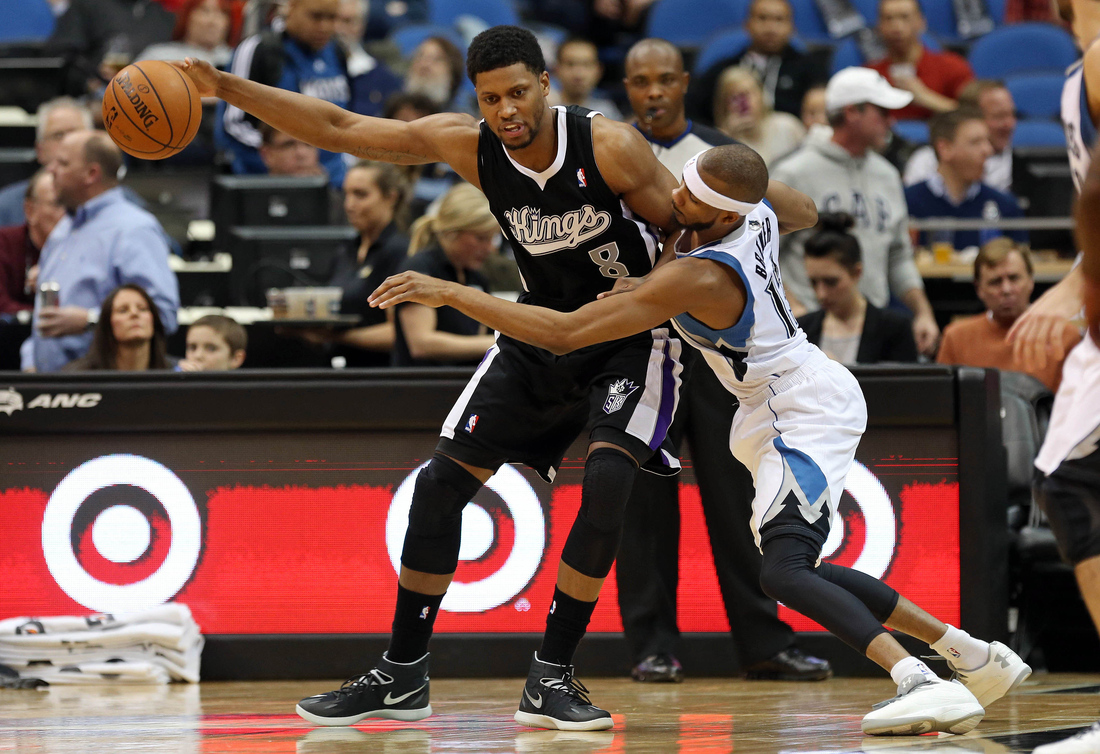
Should he opt out, Gay is an even bigger dice roll. He's due $19 million next season, but has an option to become a free agent on July 1 if he so chooses. Before being traded to Sacramento, no one dreamed he'd opt out. With the Kings, he's averaging 21 points per game while posting a 61.3 true shooting percentage. Those are star numbers.
Imagine he does opts out. What on Earth do you offer a guy like this, who with one team can score 20 times a game at 38 percent and in that same season with another team score more than 20 per game on Durantian efficiency? His stat sheet should just be a bucket of question marks. If Gay continues this torrid performance and then opts out, his July courtships will be fraught with peril.
(There's a strong line of thinking that the Kings will reach a deal with Gay, leading him to opt out and sign for multiple years at a lower rate -- say, $12 million per year -- a la Richard Jefferson and the Spurs. That would allow the Kings to pay Isaiah Thomas and stay under the luxury tax while pushing for the playoffs next season.)
The NBA did everything it could to ease the sting of bad free agent deals. And sure, there are no more Juwan Howards or Eddy Currys, deals that crush franchises for almost a decade. But free agency is still tricky, and mysterious veterans like Ariza and Gay are why.


