

SB Nation’s 2016 Masters Preview
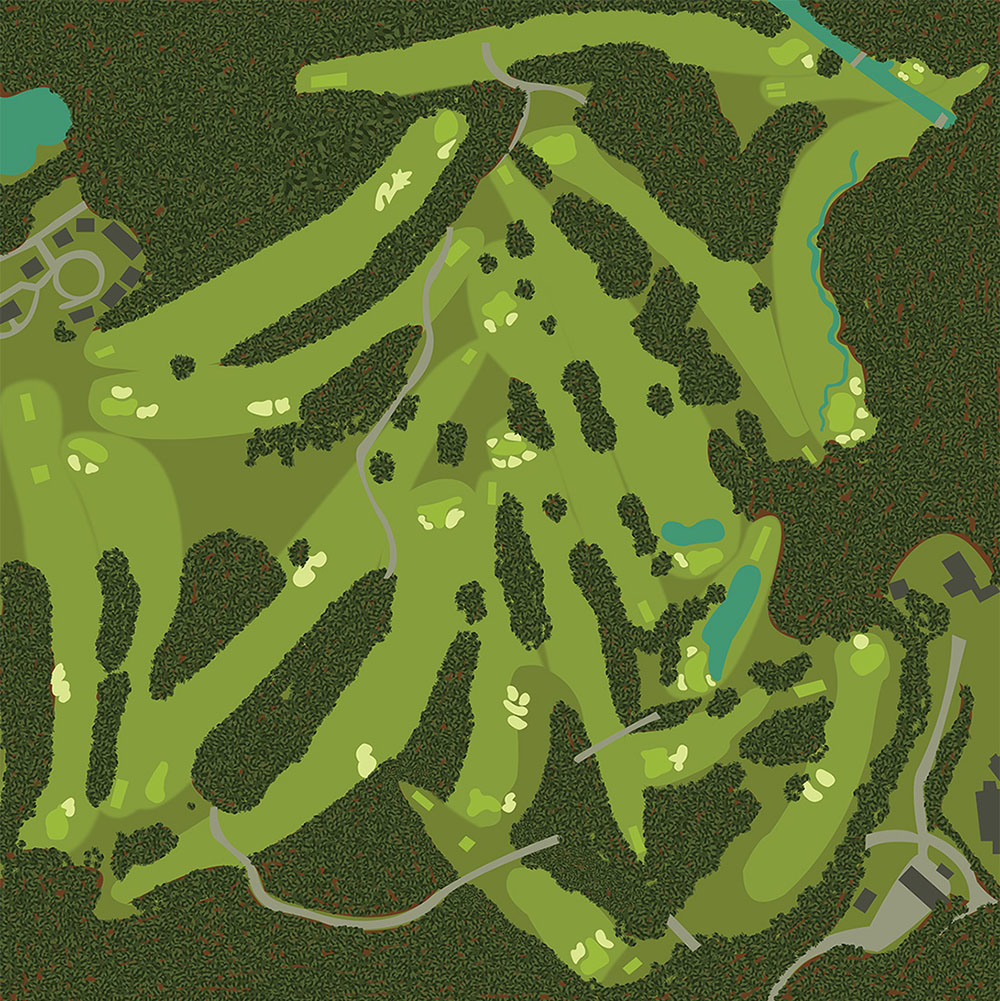
Augusta National course guide
by Mark Sandritter; illustrations by Brittany Cheng

Hole 1: Tea Olive
 445-yard Par-4
Although it looks like a simple starting hole, No. 1 at Augusta National typically plays as one of the hardest holes on the course. The biggest challenge is a sloped and undulated green. A lack of precision on approach shots can easily turn into three-putts at No. 1.
Changes
The hole got a slight makeover in 2006, becoming roughly 20 yards longer with additional trees on the left of the fairway. It is now 45 yards longer than it originally was, with a significant increase in the number of trees lining the fairway.
Big Moment
Lee Elder made history at No. 1 in 1975 when he hit his opening tee shot and by doing so, broke the color barrier at Augusta National.
Hole 2: Pink Dogwood
 575-yard Par-5
Historically the third-easiest hole at Augusta, No. 2 is a good birdie or better opportunity. Nearly the entire field will attack the Par-5 green on their second shot with two greenside bunkers the only real deterrent. The hole sets up perfectly for right-handed players who like to shape a draw off the tee.
Changes
Initially, players only had to avoid one bunker around the green before the left greenside bunker was added in 1946. The tee was moved back about 20 yards in 1999. The fairway bunker was moved closer toward the green and to the right to become a factor in the landing area off the tee.
Big Moment
Making a par here is like making bogey. It’s an easy birdie opportunity with a few players also making eagle. In 2012, Louis Oosthuizen recorded the hole’s first double eagle. He smoked a perfect second shot that cut toward the cup for an easy eagle try … then it just kept rolling, rolling and rolling and found the bottom of the cup for the fourth double eagle in Masters history.
Hole 3: Flowering Peach
 350-yard Par-4
The shortest Par-4 on the course is also historically the easiest Par-4 on the course. Most players opt for position off the tee with a long iron or fairway wood. The small green provides a stiff challenge, especially with with the right pin placement. Missing short of the green leaves players in a really bad spot.
Changes
The hole hasn’t undergone many significant changes outside of some minor bunker tweaking.
Big Moment
Jeff Maggert opened Sunday of the Masters in 2003 with a two-shot lead. He wound up finishing five shots off the lead, in large part to No. 3. After hitting an iron into a fairway bunker, Maggert’s second shot caught the lip of the bunker and came back to hit him in the chest. That led to a two-shot penalty and he went on to make a triple-bogey.
Hole 4: Flowering Crab Apple
 240-yard Par-3
A long Par-3 with a heavily guarded green. It’s crucial to not miss right, as a deep bunker on the front right of the green can create a difficult up-and-down. The left side bunker is an easier scramble for those who miss the L-shaped green. The hole has played over par every single year. Brandt Snedeker, one of the the best putters in the world, five-putted this hole in 2014.
Changes
The hole was lengthened considerably in 2006 with roughly 35 yards added.
Big Moment
A hole-in-one anywhere is an incredible feat. A hole-in-one at No. 4 in the Masters is something only accomplished only by Jeff Sluman, who pulled it off in 1992.
Hole 5: Magnolia
 455-yard Par-4
A challenging uphill hole that provides a stiff test off the tee and when attacking the green. A pair of fairway bunkers are quite penal. The green slopes severely from back to front and a miss long is major trouble. Like many holes at Augusta, precision is paramount.
Changes
The Green was completely reshaped in the 1930s with a greenside bunker added in the 1950s. The original fairway bunkers have also been completely redone and moved while the tee was pushed back 20 yards in 2003.
Big Moment
After finishing No. 5 in 1960, Dow Finsterwald dropped his ball back on the green and hit a practice putt toward the sixth tee, not thinking anything of it. Only later did he learn of a no-practice-putt rule. Finsterwald was assessed a two-stroke penalty for the practice putt and went on to finish two strokes behind champion Arnold Palmer.
Hole 6: Juniper
 180-yard Par-3
A classic Augusta National hole and one of the most unique views for patrons who often sit below the raised teebox. Most players will hit a mid-iron over the patrons’ heads into the large green, and the real challenge begins once they are on the putting surface. The green has multiple tiers and plenty of slope, making it one of the trickiest to read on the course.
Changes
The shape of the green has been tweaked throughout the years, as has the greenside bunker, but the hole has largely remained the same for nearly 60 years.
Big Moment
The sloped green at No. 6 can get the best of even the top players. Jose Marie Olazabal can attest to that. In 1991, he needed four chips to find the putting surface from just off the green. His first two attempts rolled back to his feet before his third went off the back of the green. He made a quadruple bogey. He finished second that year, one stroke off the lead.
Hole 7: Pampas
 450-yard Par-4
No. 7 has undergone significant change and the result is one of the hardest holes on the course. A narrow, tree-lined fairway is only the first test. The small green is extremely well-guarded with bunkers, two in back and three in front. The approach into the green is one of the most intimidating shots that players will face.
Changes
The hole was lengthened considerably with 85 yards added during 2002 and 2006 changes. The fairway has been narrowed and is now lined with trees. The green was reduced significantly in the late 1930s when the three front bunkers were added. The final two bunkers were added in 1954.
Big Moment
No. 7 is currently set up at 450 yards, but it wasn’t always that way. In 1937 it was only 340 yards. That was a short hole in that time, but not like the pitch-and-putt it would be today. It was still short enough for Byron Nelson to smash a drive onto the green and two-putt for an easy birdie. The hole was lengthened a few years later with more and more distance added throughout the years. But not before Nelson panicked the green jackets and was able to drive the green.
Hole 8: Yellow Jasmine
 570-yard Par-5
A long hole, but a good birdie opportunity. Players need to avoid the large fairway bunker, but finding the fairway off the tee will allow most of the field to go for the green in two. Mounds, and no bunkers, protect the green. The hole is typically among the easiest each year.
Changes
The green underwent significant changes in the 1950s and 1980s. The fairway bunker was moved and altered to become a bigger challenge. The hole has been lengthened by 70 yards throughout the years.
Big Moment
In 1967 Bruce Devlin recorded what was at the time only the second double eagle in Masters history. He smoked a 4-wood from 248 yards that rolled around the corner of the green and into the cup.
Hole 9: Carolina Cherry
 460-yard Par-4
A massively sloped green is the defining characteristic of No. 9, with the elevated green sloped from the back to front. Most players will aim for the right-center of the fairway to set them up with a good angle in to attack the green and avoid the greenside bunkers on the left. Distance control into the green is key to avoid spinning off the front edge.
Changes
The green and the greenside bunkers were reshaped in the late 1930s. The hole has been lengthened 40 yards and the landing area off the tee has become much tighter with added trees down both sides of the fairway.
Big Moment
Jack Nicklaus had to step off his birdie putt twice at No. 9 in 1986 due to a pair of Augusta roars. Unfazed, he joked to the patrons around the green about making a similar roar and proceeded to roll in a 12-foot birdie putt.
Hole 10: Camellia
 495-yard Par-4
The back nine opens with a brutal three-hole stretch, beginning with No. 10. Historically it’s the hardest hole on the course. Most players will try to shape their tee shot around the dogleg left, but there isn’t a lot of margin for error. Go too far right and it’s a long second shot into the green. Too far left and trees become a major problem. The green slopes from right to left can be among the most deceiving on the course.
Changes
The hole was changed dramatically in 1937 when the green was moved back 55 yards with a new greenside bunker added. The tees were moved back in the 1970s and early 2000s, lengthening the hole to the current 495 yards.
Big Moment
On the second playoff hole in 2012, Bubba Watson hit an errant drive way right off the tee. That set up one of the greatest recovery shots in golf history when he hit an extreme hook out of the pine straw and onto the green just 15 feet from the pin. He finished off a par to win the green jacket.
Hole 11: White Dogwood
 505-yard Par-4
The start of Amen Corner, No. 11 is the longest Par-4 on the course and historically the second-hardest hole. A dogleg right and overhanging trees require players to shape a shot off the tee. Water surrounds the left side of the green with a bunker guarding the back right. Missing short leaves a tricky up and down. Coming away with par is a victory, especially with a Sunday pin placement — which almost no one challenges because it requires flirting with the water front. Almost everyone bails out to the right and is happy to chip onto the green.
Changes
Rae’s Creek ran along the front left of the green initially. That was changed in the 1950s with the current pond replacing the creek. A significant amount of trees have been added to narrow the fairway over the years. The hole has also been lengthened several times, growing by 90 yards.
Big Moment
Greg Norman hit his approach shot on the second playoff hole in 1987 to about 50 feet. With Larry Mize 140 feet away and off the green, a par seemed likely to tie the hole. Then Mize improbably holed his chip to win the hole and steal the green jacket.
Hole 12: Golden Bell
 155-yard Par-3
Arguably the most famous Par-3 in golf. A short hole, but a challenging one. The wind plays a significant factor on most days and can vary club selection. Rae’s Creek guards the front of the hole with a large bunker in front and two in the back. There aren’t many good places to miss at No. 12 and a par is always a good score.
Changes
The shape of Rae’s Creek changed slightly in the early 1950s with part of it being dammed. The bunkers were also tweaked with a second one added at the same time. The hole has been relatively unchanged for more than 60 years. For such a short hole, there has not been an ace at the 12th since Curtis Strange dropped one in 1988.
Big Moment
Fred Couples’ tee shot in 1992 was on its way to Rae’s Creek. After coming up short, the ball was destined to find the water. Somehow, it caught something, got held up and stopped just short, defying physics in the process. He got up-and-down for par and went on to win his first Masters.
Hole 13: Azalea
 510-yard Par-5
The final hole of Amen Corner is a welcome sight to most of the field after surviving the brutal opening stretch to the back nine. Most players will attack No. 13 in two, especially those who can shorten the hole by shaping their shot around the dogleg left. Bunkers guard the back of the hole with a tributary of Rae’s Creek running along the front. The hole provides one of the best birdie, and eagle, opportunities at Augusta.
Changes
The green and surrounding bunkers were reshaped, making for a smaller two-tiered green and four larger bunkers. Like most holes at Augusta, No. 13 has become longer throughout the years, growing by 30 yards. But it’s still a two-shot par-5 for the modern bombers, one of the reasons Augusta National is exploring purchasing land from abutting Augusta Country Club and moving the tee back.
Big Moment
Like all three holes at Amen Corner, there are many memorable moments to choose from but we’ll inject recency bias and choose Phil’s pine straw laser. Holding the lead on Sunday, Phil Mickelson was facing a second shot at No. 13 from the pine straw. To make matters worse, there were three trees surrounding him, including one directly in front. Many players would have laid up to avoid disaster. Mickelson went for it and absolutely stiffed it on the way to his third Masters win.
Hole 14: Chinese Fir
 440-yard Par-4
A straight and relatively unguarded hole, the key to No. 14 is the approach shot. The heavily sloped green has multiple tiers and is extremely challenging. That makes the second shot into the hole paramount, as a bad miss can easily result in a three-putt. The sloped fairway doesn’t make a precise second shot any easier.
Changes
There was originally a fairway bunker, but that was removed in the 1950s. Trees were added in the 1990s to make the fairway more narrow, while the hole was lengthened 35 yards in 2002.
Big Moment
Fresh off an eagle at No. 13, Phil Mickelson pulled off another once-in-a-lifetime shot on the next hole and sent the back nine Saturday crowd into hysterics. After hitting a great drive, he spun a wedge into the cup for one of the wildest back-to-back eagle stretches you’ll ever see. It just so happened to be at the biggest tournament in golf.
Hole 15: Firethorn
 530-yard Par-5
The easiest hole on the course, No. 15 provides a great birdie opportunity. With a good drive, many players will only have a mid-iron onto the green on their second shot. There is a pond and a bunker guarding the front of the green, but missing long is relatively safe. Unlike some holes on the course, the green at No. 15 is not especially challenging and a good second shot is often rewarded with a birdie or better.
Changes
A small creek was dammed to create the large pond in front of the green. At one point the hole had only a few trees, but more have been added at various points to narrow things, especially near the landing area off the tee. The tee has been moved back multiple times, adding 45 yards to the hole.
Big Moment
Tiger Woods hitting an approach shot off the flagstick, which ricocheted back into the water, led to the most dramatic rules controversy in Masters history. It’s not a highlight, but it is the most memorable moment on the hole in the modern era.
Before the “Tiger Drop,” the 15th was most famous for Gene Sarazen holing out on his second shot for a double eagle in 1935. It was the first double eagle in Masters history. It also helped propel Sarazen to the green jacket that year. He entered the hole three shots off the final round lead. Suddenly after nailing a 4-wood some 240 yards, he was tied at the top. He went on to win the Masters in a playoff and the bridge over the water hazard was dedicated to him and named Sarazen Bridge.
Hole 16: Redbud
 170-yard Par-3
Players hit their tee shot over a large pond, but it’s rarely a factor. Instead, the challenge is landing your tee shot on the correct tier of the green for the pin placement that day. The green is heavily contoured and sloped, making some pin placements especially tricky.
Changes
The hole underwent major changes in the late 1940s with the previous creek being dammed to create the large pond, while the green was completely rebuilt and moved. The tee box was also moved, reshaping the entire hole.
Big Moment
You could write a novel of all the great shots Tiger Woods has hit, but his best may have been on No. 16 in 2005. A heavily sloped green, not much room to work with and a tight lie made for a major challenge. It had disaster written all over it. Woods stalked the chip from every angle, then pulled off the shot of a lifetime. The patrons were stunned. The announcers were stunned. Playing partner Chris DiMarco was especially stunned. The shot helped rocketed Woods to his fourth green jacket and is maybe the greatest stroke in the history of golf.
Hole 17: Nandina
 440-yard Par-4
The tee shot at No. 17 looks a lot different now than it once did with the Eisenhower tree no more. The challenge of the hole depends on the pin placement. The right side of the green is a much bigger challenge than the left. A back-right pin placement on Sunday makes the hole significantly more difficult.
Changes
A harsh ice storm damaged the famed Eisenhower tree (a giant loblolly pine that lorded over the fairway) in 2014, to the point it had to be removed. That made for a drastic visual change at the tee box. Over the years, the hole was lengthened 40 yards with an abundance of trees added along the sides of the fairway. Two greenside bunkers were added with the green being slightly reshaped.
Big Moment
At 46 years old, Jack Nicklaus had been all but written off as a major championship contender. Then came the 1986 Masters. Nicklaus sunk a double-breaking birdie putt that helped him claim his final major championship, which is the most dramatic final round in the history of major championship golf . The putt is well remembered for the shot of Nicklaus holding up his putter in classic fashion while the ball drops into the cup. Verne Lundquist added to the lore with a simple, but effective “yes sir!” call that will be shown and replayed forever.
Hole 18: Holly
 456-yard Par-4
The finishing hole is a dogleg right that plays uphill. The ideal drive is down the left of the fairway for a good angle into the green. Two large bunkers guard the front of the two-tiered green, which slopes from back to front and to the right. Accuracy into the green is key if players want to avoid a three-putt. The final hole provides a stern test, but can also be a birdie opportunity if played correctly. There is a real chance for a two-shot swing thanks to the green.
Changes
The green was reshaped and reduced significantly in the late 1930s. The original fairway bunker was replaced with two new bunkers that factor more into the tee shot. More trees were added to the left side of the fairway, making for a much narrower chute off the tee.
Big Moment
The 18th hole at Augusta has been home to countless memorable shots that have helped secure green jackets. Golf fans can’t forget Phil Mickelson’s putt and leap when he won his first major. Sandy Lyle’s bunker shot in 1988 might just top them all. When he stepped to the 18th tee, he needed a par to force a playoff. The nerves may have gotten the best of him off the tee when he hooked his shot into a bunker. He needed a great out to remain in position to save par, but did one even better. His bunker shot sat on the top of a crest for what seemed like an eternity before trickling down toward the hole. He followed up the spectacular shot with a birdie putt to win.