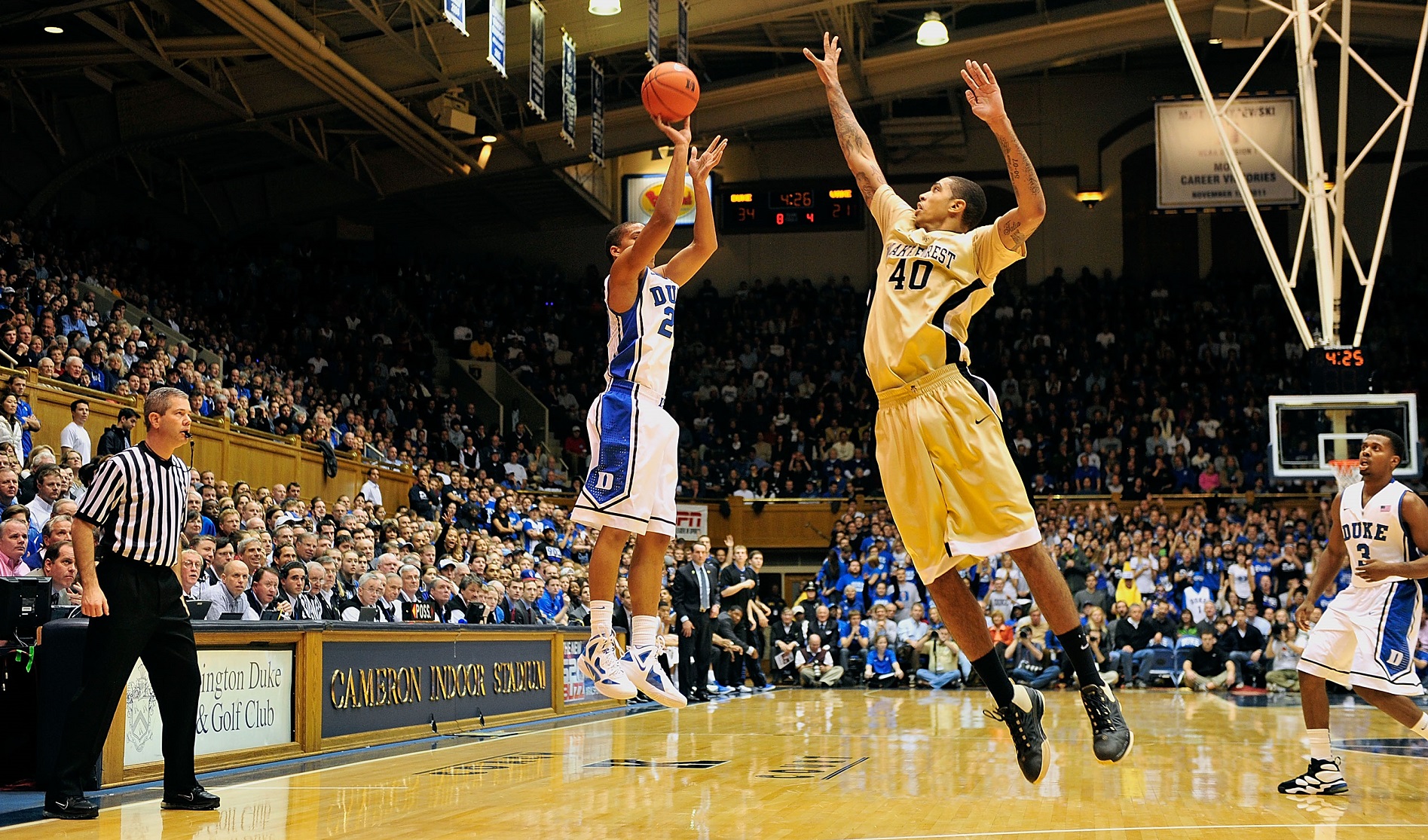
I'm driving east on U.S. 264, headed home from Duke University's Cameron Indoor Stadium. Clouds cover the setting sun behind me. I feel like I need a shower. I just interviewed a kid who didn't want to be interviewed, and we talked about things he didn't want to talk about, all under the supervision of a man who'd be far happier if I wasn't there, just so that I can write a story they'd both prefer that I not write -- a story that isn't even the story I first set out to write five months ago.
* * *
In 2009, Andre Dawkins was a 6'4 high school junior at Atlantic Shores Christian School in Chesapeake, Va., ranked by ESPN as the No. 10 overall recruit and the No. 2 overall shooting guard for the class of 2010. Recruited by Duke, he graduated from high school a year early just to help the Blue Devil's razor-thin backcourt for the 2009-10 season. He then suffered a terrible tragedy: A little more than a month into the season, his older sister, Lacey, 21, died after a car accident on Dec. 5, 2009 while traveling to Durham to watch him play in a game against St. John's. It would have been the first college game she'd seen him play.
A little more than a month into the season, his older sister died after a car accident.
Andre not only overcame that to rejoin the team, and not even miss a game, but he performed beyond everyone's expectations. Even as a freshman, he became a team leader, someone who others looked up to and who put together a series of clutch performances.
"He doesn't play like a freshman," Duke coach Mike Krzyzewski told the Raleigh News & Observer.
Senior Duke guard Jon Scheyer, now a Duke assistant coach, said at the time, "It's amazing what he's doing."
His roommate, Ryan Kelly, now playing for the Los Angeles Lakers, remembers, "Every freshman has to go through their lumps, but he had that one always-reliable skill, that unbelievable skill to shoot the basketball. I was a freshman who came in who was an All-American in high school, and I didn't even play that much my freshman year. And there's Andre, just killing it. I mean, he was just unbelievable. He could change a game. Freshmen don't do that unless they're already some superstar coming in. But for Andre to come in a year younger than everybody else, and to come off the bench and to make the big plays he made and the big shots -- that's something special."
And that's why his older sister, Lacey, and their biological mother, Tamara, tried to drive down from Columbus, Ohio, in the middle of a snowstorm, to see him play. Although Andre had been raised by his father and stepmother, he and Lacey talked, or at least texted each other, every day. Andre described Lacey to the Durham Herald-Sun as "a fun-loving, happy person," and said, "Whenever she came into a room, she was able to put a smile on someone's face, no matter how bad you felt." He kept pictures of Lacey pinned to the wall in his dorm room.
Driving a Chevy Lumina, Tamara hit a patch of ice in West Virginia. They spun into one car, and then another. Lacey died at Raleigh General Hospital.
Andre left the team to be with his family. "Take as much time as you need," Krzyzewski told him. But how does an 18-year-old kid know how much time he needs?
As it would turn out, he had no idea. No one did.
Lacey's funeral was a week after the accident, on Saturday, Dec. 12, in Charleston, W.Va. Krzyzewski was there, along with assistant coach Nate James and athletic director Kevin White.
Afterward, Andre decided he had taken all the time he wanted to take. He went back to Durham with Krzyzewski, practiced Sunday and Monday, and he played in the team's next game that Tuesday, Dec. 15, against Gardner-Webb.
"Just don't worry about it. Let's just play basketball. Don't worry about me."
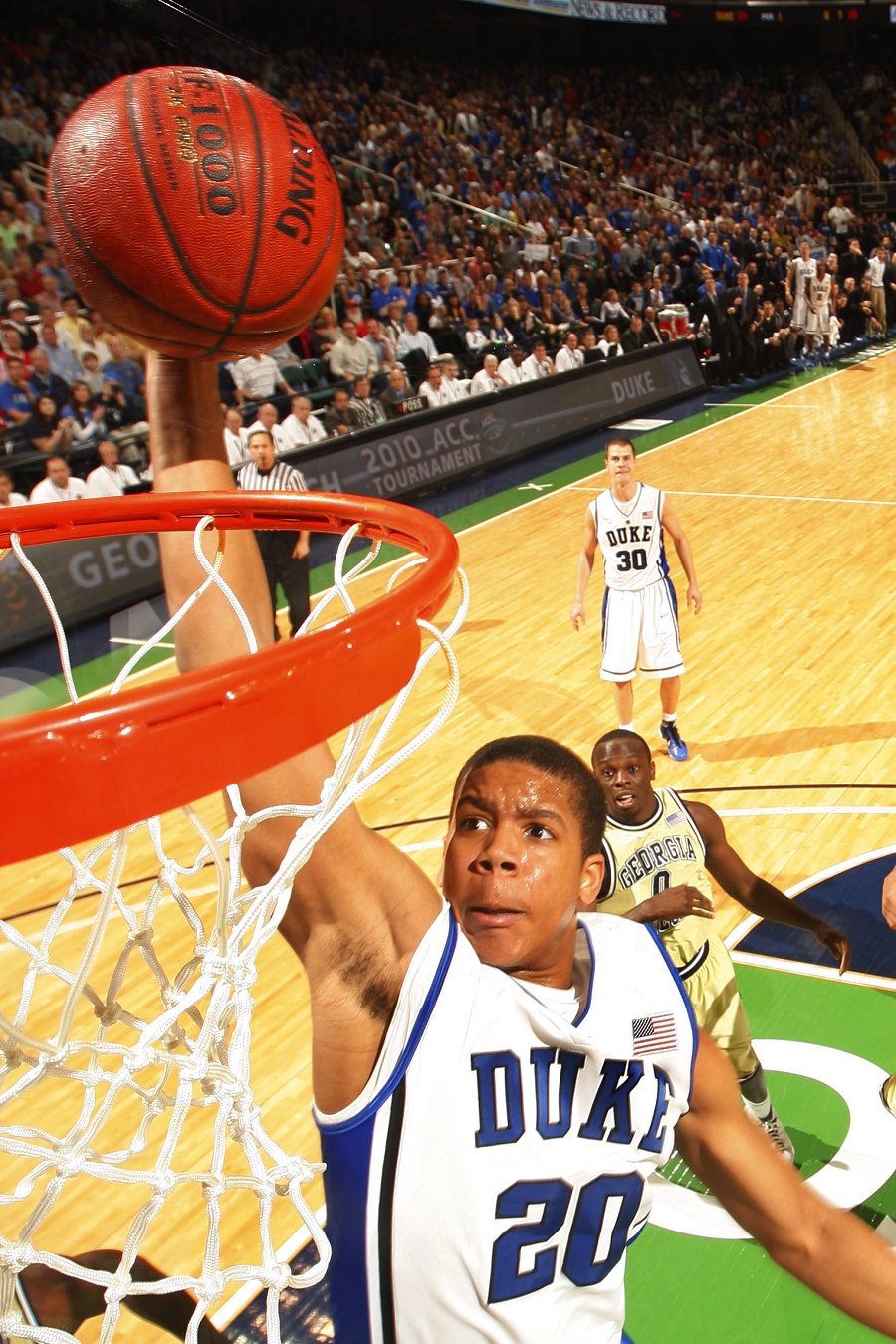 USA Today Images
Says Kelly, "When he came back, he and the coaches spoke to the team and they were like, ‘We just want to concentrate on the team, and on basketball.' Dre said, ‘Just don't worry about it. Let's just play basketball. Don't worry about me.'"
When he entered the game at the 16:17 mark, the fans packing Cameron gave him a deafening standing ovation. He then scored 16 points over the course of the game, hitting six of his nine shots. Durham Herald-Sun writer Bryan Strickland wrote, "It looked like he hadn't been away."
That's how the rest of the season went for Andre, too.
"Like for most players," Kelly says, "whenever anything tough happens, the outlet is the gym, where you can just let it all go away when you step on the court. It's easier for some than for others, and I don't think it's easy at all for somebody who loses someone so close to him. So I think for Andre, his attempt was to just, you know -- ‘I just want to play basketball.'"
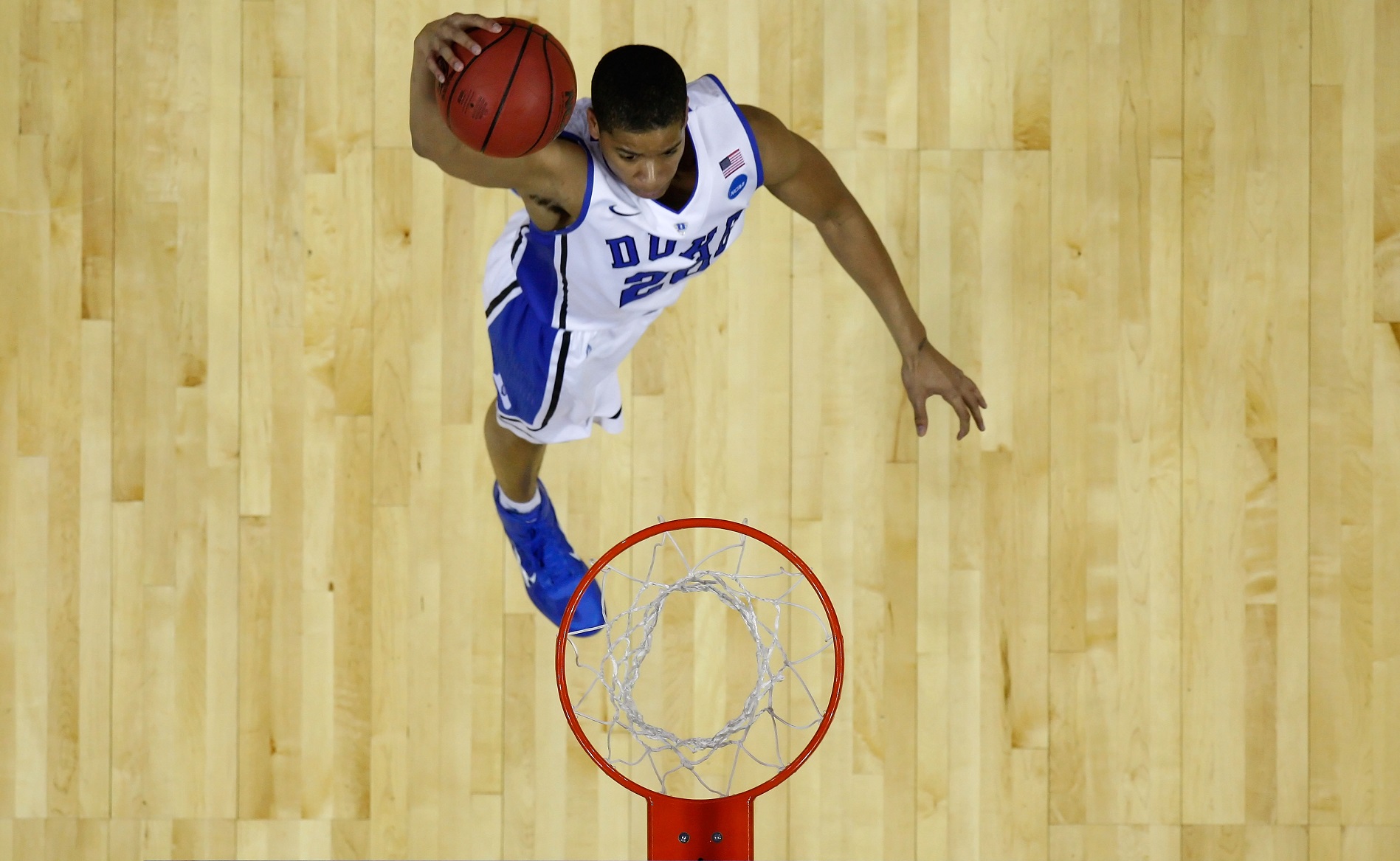
For much of the season he averaged double-digit points and shot better than 50 percent from the three-point line. In the NCAA tournament he hit two huge three-pointers against Baylor in Duke's Elite Eight matchup, one of which cracked open the window that led to the Blue Devil's eventual comeback win.
"There's no question," says Kelly, who was also a freshman and Andre's roommate that year. "We wouldn't have won without Andre."
The way Andre ended up becoming an absolutely crucial part of Duke's run through the NCAA tournament so soon after his sister's death made him a hero to many, an inspiration, a compelling story of resilience and redemption that gave others hope. It ran in all the newspapers and magazines, framed like this: The Kid who already sacrificed his senior year of high school to help the team bounces back from tragedy to lead his team to a title, like a made-for TV movie.
Once a hero in a movie or a show overcomes something, once life is beautiful again and full of hope, the credits roll and the lights come up and we're left believing maybe that's how our lives could go. But they rarely do. No matter how hard we try to tell the truth, creating a story from the events of our lives, one with a beginning and a middle and an end, is in some ways false, a fiction. People don't really have stories that start and end. They have lives that change and evolve.
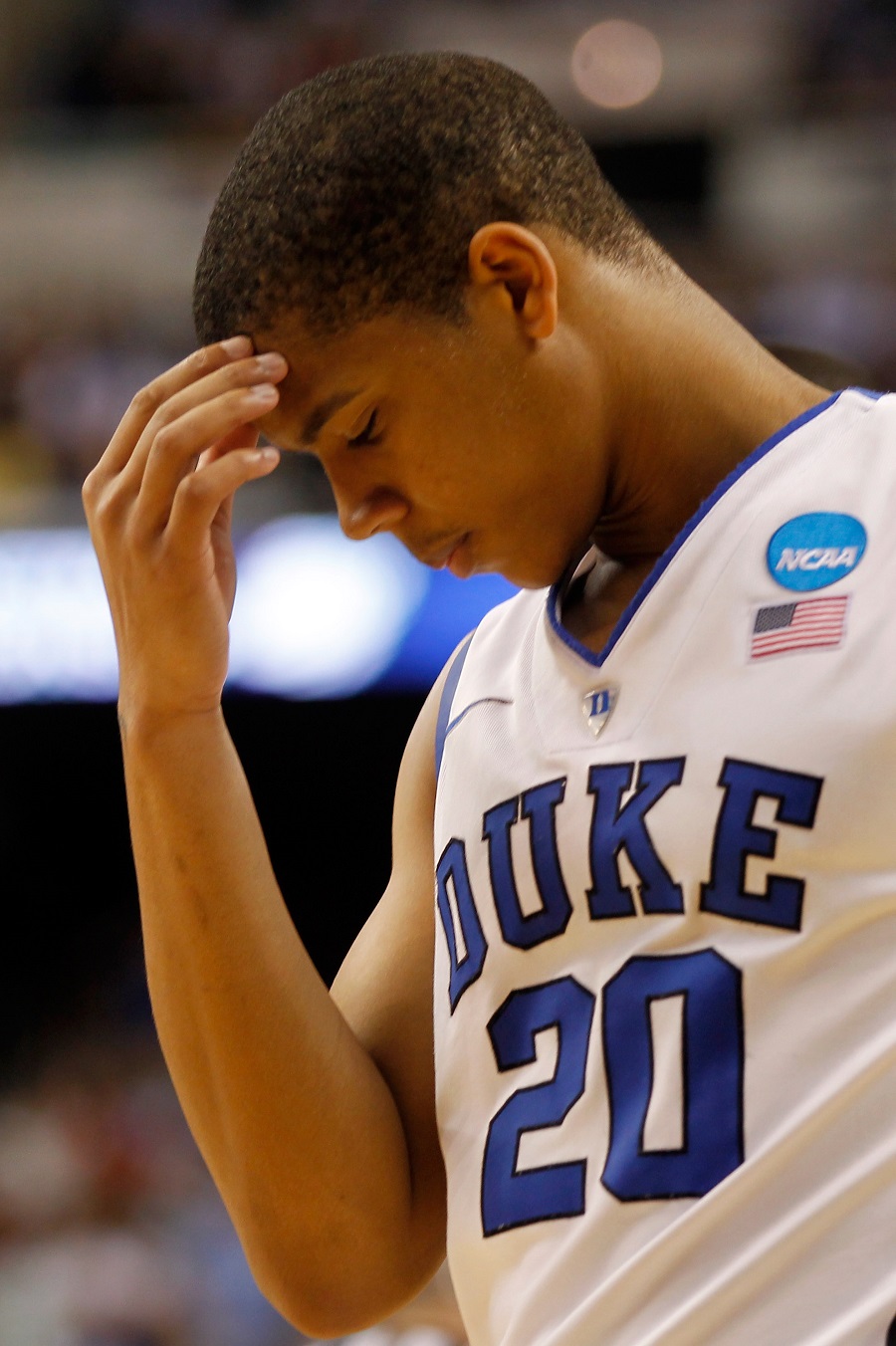
That's what happened to Andre. By his junior year, his biggest problem should've been deciding whether to leave school early to jump to the NBA. Instead, he was debating whether he even wanted to play basketball anymore. Under a mountain of unresolved grief, he and his game had fallen apart.
"He wasn't smiling, like, ever," says Kelly. "It looked like basketball wasn't fun. He just looked heavy."
After the funeral, when he'd thought he'd taken all the time he'd needed, he had been wrong. "He was just -- ‘I don't want to talk about anything extra, just let me go play basketball,'" says Kelly. "And that may be a fix, but it was a temporary fix. It didn't fix it.
"When you're a Division I basketball player who's pretty darn good, you're not supposed to talk about your feelings and the tough times," says Kelly. "You're supposed to talk about the good times."
Andre began his junior year as a starter but ended it on the bench. Over his last six games that season, he made just two of 17 shots and scored just eight points. Only one of those shots, and five of those points, came in Duke's final game of the year, the Blue Devils' shocking elimination, as a No. 2 seed, in the NCAA tournament, losing in the first round to No. 15 Lehigh.
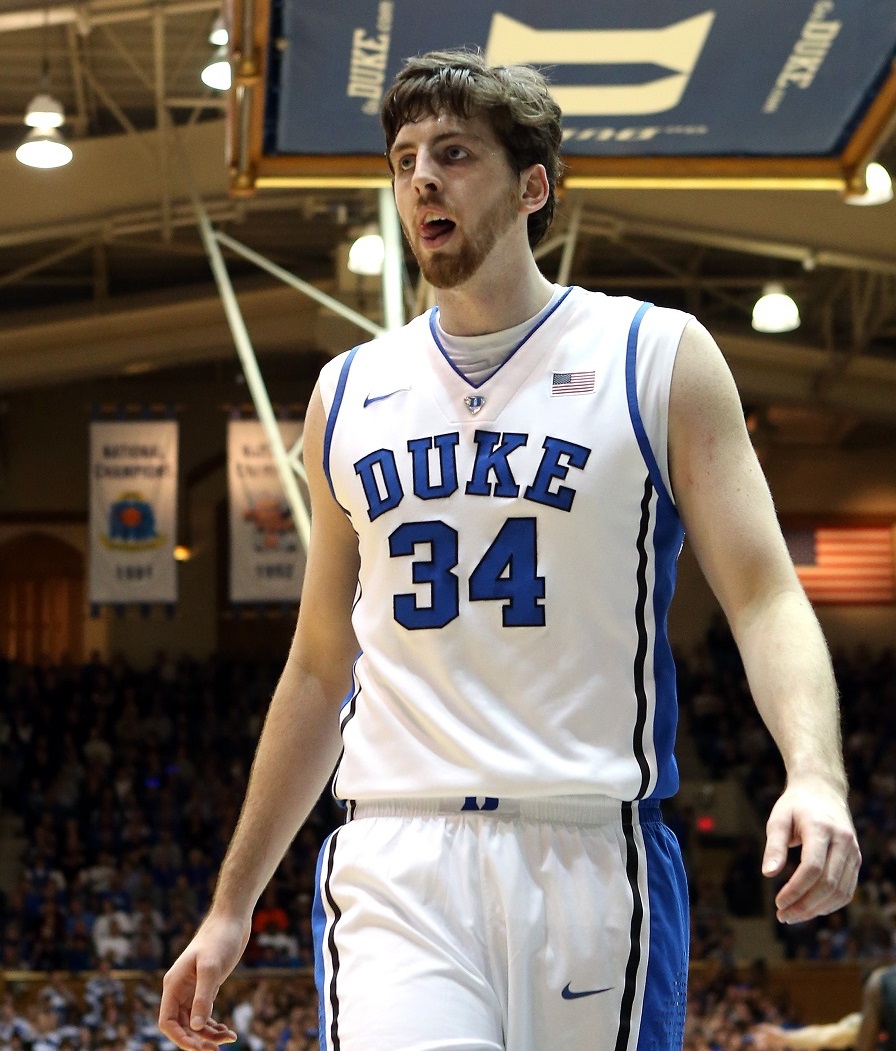 Ryan Kelly (Getty Images)
 The roars he'd once received were replaced by boos. The hero had become hated.
Yet, through it all, it seems as though Andre himself didn't really realize what was going wrong. Fortunately for him, others did: After the season, Krzyzewski and other Duke coaches suggested that he might need a break. They sat down with Andre and after a long conversation -- one they maybe should have had much earlier -- they told him that he needed to focus on himself, and nothing else. He needed to get counseling. He needed to heal.
Andre discussed this future with his family and a couple of close friends. Kelly says, "I just told him, ‘You need to do what's most important for you. Obviously, I love you as a teammate. And more as a friend. But as a person, it's more important to take care of yourself.'"
He left the team. That created a different story, but it was still a Story. Only instead of the expected "triumph over tragedy" meme, it now became "under the weight of tragedy, a young and rising star collapses."
Krzyzewski publicly announced that Andre was redshirting, and the program would honor Andre's scholarship, but redshirts usually participate in most team activities and practices apart from actual games. But Andre had nothing whatsoever to do with the team during the 2012-13 season.. "The main mission for him," Duke assistant coach Jeff Capel told GoDuke.com recently, was "for him to get better."
He wasn't in the team picture. He didn't go to meetings, or shootarounds. He lived off-campus. His mom, Lacey's mother, Tamara, moved from Columbus, Ohio, to live with Andre in Durham. His grandmother moved up from Texas to help them both.
He didn't even pick up a basketball again until Christmas, when he shot around a bit with his dad and younger brother.
Instead, he took classes. He played golf. He gained weight. He did not go to Duke's annual Countdown To Craziness. He did watch on TV, and cheer loudly, when Kelly came back from what everyone thought was a season-ending foot injury to score 36 points against Miami. He did not join Kelly on the court for Senior Night, when Kelly, along with Seth Curry and Mason Plumlee, played his last game in Cameron.
Andre finally did begin talking about Lacey. He confronted his pain. And then he began to heal.
Fortunately, the terrible story of the player crushed by the weight of tragedy didn't stick to any neat arc, either. With the help of his family and his pastor and his therapist, Andre finally did begin talking about Lacey. He confronted his pain. And then he began to heal.
So now, Andre's third story in the past five years is starting to take shape.
On April 11, 2013, Andre announced he would rejoin the team this year. He took Kelly's former locker and adopted his number, 34, switching from number 20. This past summer, Kelly saw Andre back in Cameron, working out and playing pickup with some of the guys. "He had a lightness on the court again," he said "He was having fun again. And, man, that was so great to see. He was just smiling constantly. And I think there's going to be a lot more smiling now."
At Duke's annual basketball kickoff event, Countdown to Craziness on Friday, Oct. 18, the public address announcer, for the first time in a long time, bellowed out Andre Dawkins' name. The Crazies went absolutely nuts. Andre couldn't help himself. He turned and faced them and smiled one of the biggest smiles ever and screamed, "I'm back, baby!"
He'd even grown, listed at 6'5 now, which was too perfect of a metaphor.
The subsequent Blue-White scrimmage, broadcast live on ESPNU, was, as usual, Duke's first public appearance of the new season. And guess who scored Duke's first points? Andre, hitting a three-pointer the first time he touched the ball.
As if that's not Hollywood enough, with one second left and the scrimmage tied, Andre was fouled. He hit both free throws to give his team the win.
You just don't get a narrative any better than that: A rise, a fall, and then a resurrection and, finally, ultimate redemption. Add the fact that Duke looks poised to make another run at the national championship. If they do, Andre's personal story could go over the top to become one of the most touching stories in years, ripe for movies and books and long magazine features written by ambitious journalists keeping one eye on the annual collections and lists of the years' best journalism.
That's the story I hoped to write and started working on in the spring, when I learned that he wanted to play again. And if my reporting had gone the way I'd wanted it to, what happened at Countdown to Craziness would've given me a perfect ending to a preseason profile, neat and tidy.
Only the story didn't go at all the way I thought it would.