He was born on fourth-and-long. Mom drank when she was pregnant with him. Traded sex for drugs while he was in diapers. State authorities dragged him out of a crack house closet when he was 4 years old. Threw Mom in prison. Dad? Dead before the kid met him.
Start most kids off like that, they're looking at 15 to 20 by the time they're 18. Unless they learn to catch a football in traffic or cut down a running back behind the line. That's what Ra'Shede Hageman learned to do, which opened another path — one he followed to the University of Minnesota — where he's a 23-year-old senior defensive tackle on the watch lists for this year's Outland Trophy, Bronko Nagurski Trophy and the Chuck Bednarik Award. And that could lead to a first-round selection by the NFL. But his past could still outrun his future.
* * *
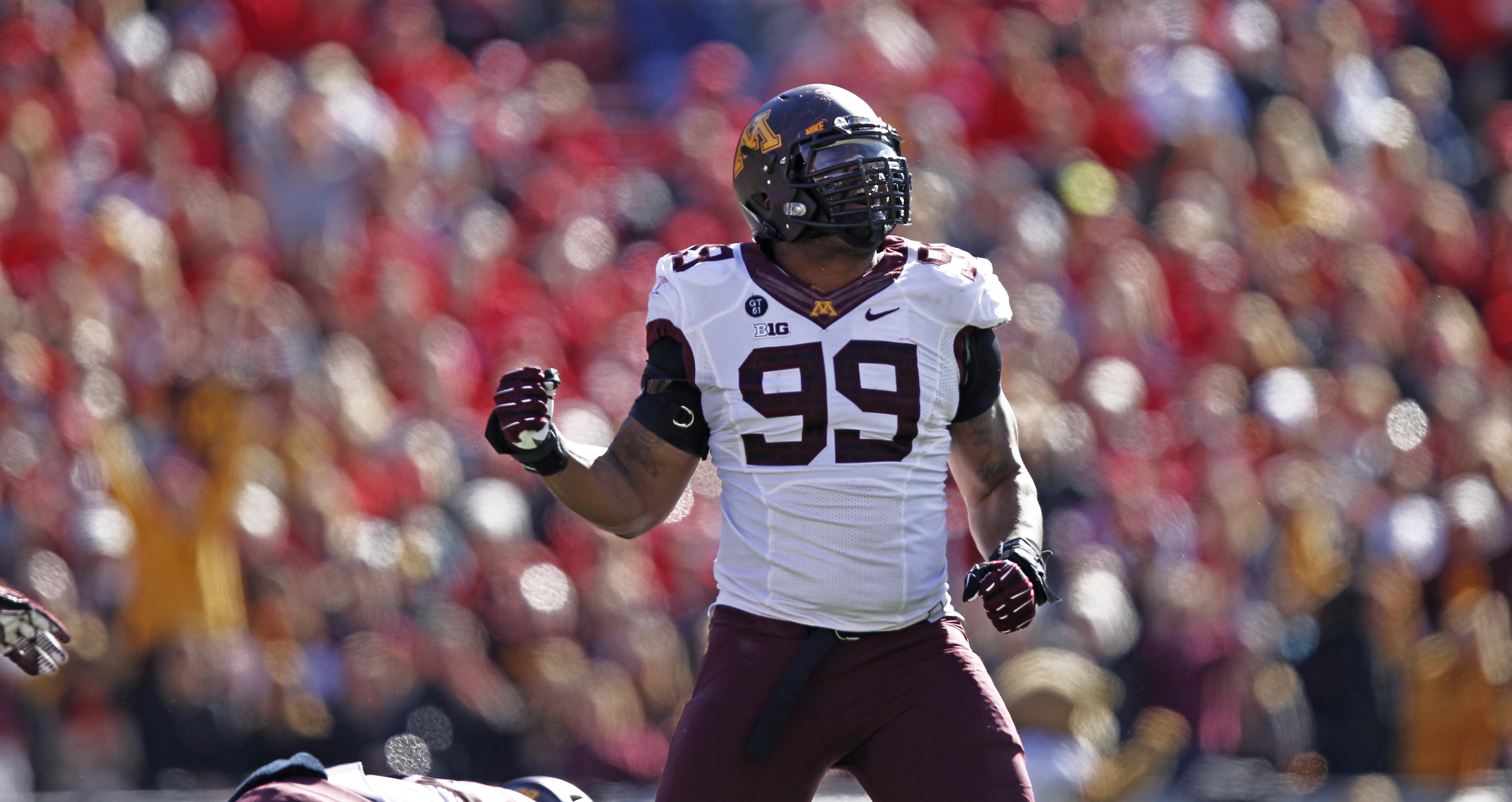
Saturday, Oct. 26, Ra'Shede trots down the darkened tunnel and onto the sun-drenched turf of TCF Bank Stadium, home of the Golden Gophers. He's huge. The program lists him at 6'6 and 311 pounds, but he's bigger in person. His bare calves ripple like the quadriceps of most men, his thighs scream power, and his hands are thick as catcher's mitts. His shoulders and chest form a solid mass with only a slight paunch above his belt, the No. 99 stretched across his white jersey, front and back. He's topped by a large maroon helmet, his expression shielded by a tinted visor, scratched on the side.
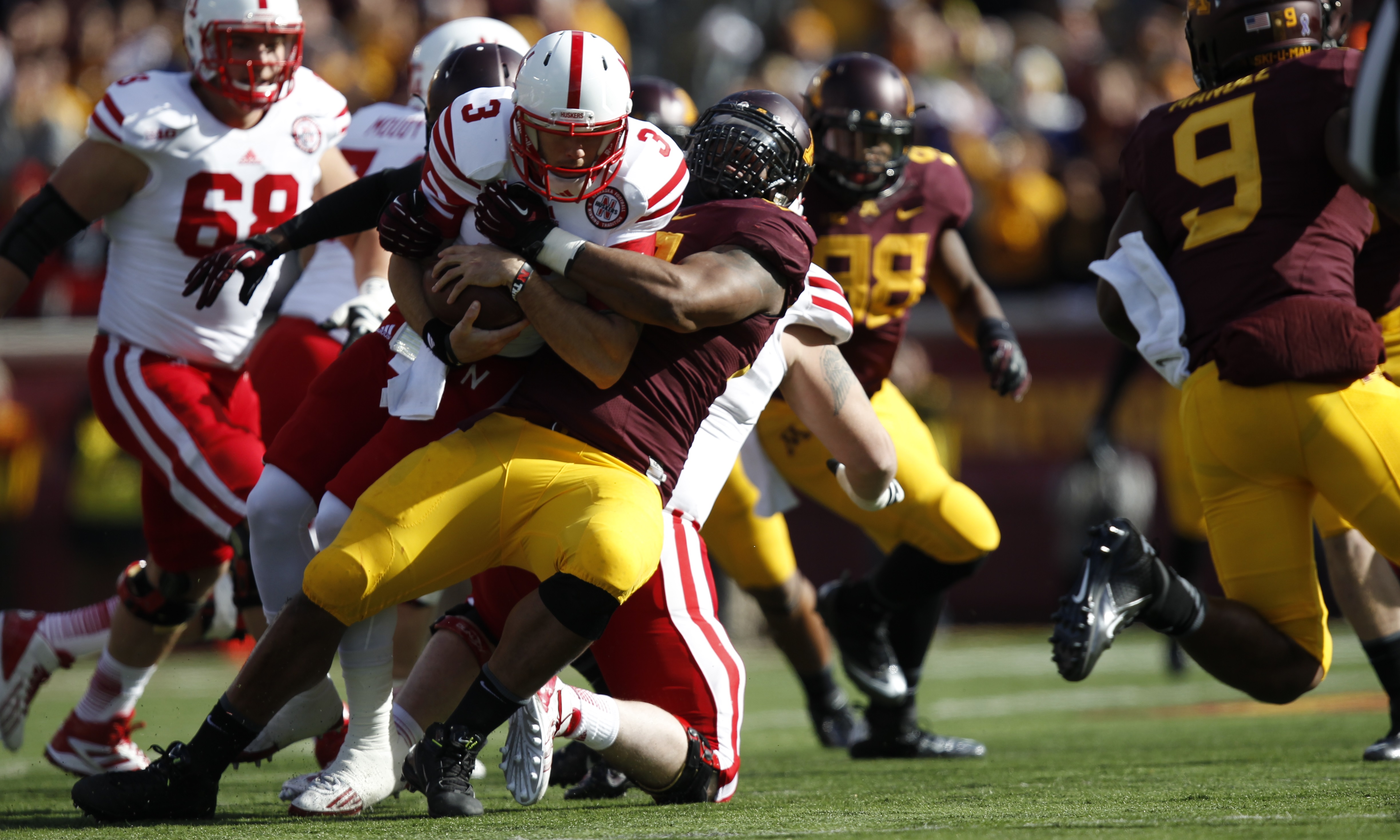
This is the face of Minnesota football. His photo shines on the cover of the Gophers' 2013 media guide, a color shot with fists clenched in celebration, biceps flexed, his head tipped slightly back, but his expression invisible behind the dark visor of his helmet. He and the Gophers are up against long odds this afternoon: No. 21 Nebraska. Minnesota has not beaten Nebraska since 1960 ("A long time — you do the math," Ra'Shede says at the post-game press conference); in the last dozen meetings, the Cornhuskers have outscored the Gophers, 568-86. But the Gophers have won five of their seven games. Ra'Shede's having an excellent season, piling up tackles for a loss, sacks, hurries, pass deflections and blocked kicks. Against Northwestern, he even picked off a pass.
Ra'Shede and his teammates jog past the cheerleaders, the band, the television cameras. The fans, especially the students in the section surrounding the tunnel, greet them with enthusiasm. It's a perfect Minnesota autumn afternoon for collegiate football, crisp and sunny, a day ripe with possibilities.
* * *
they all say the same thing: great future, as long as he stays on track.
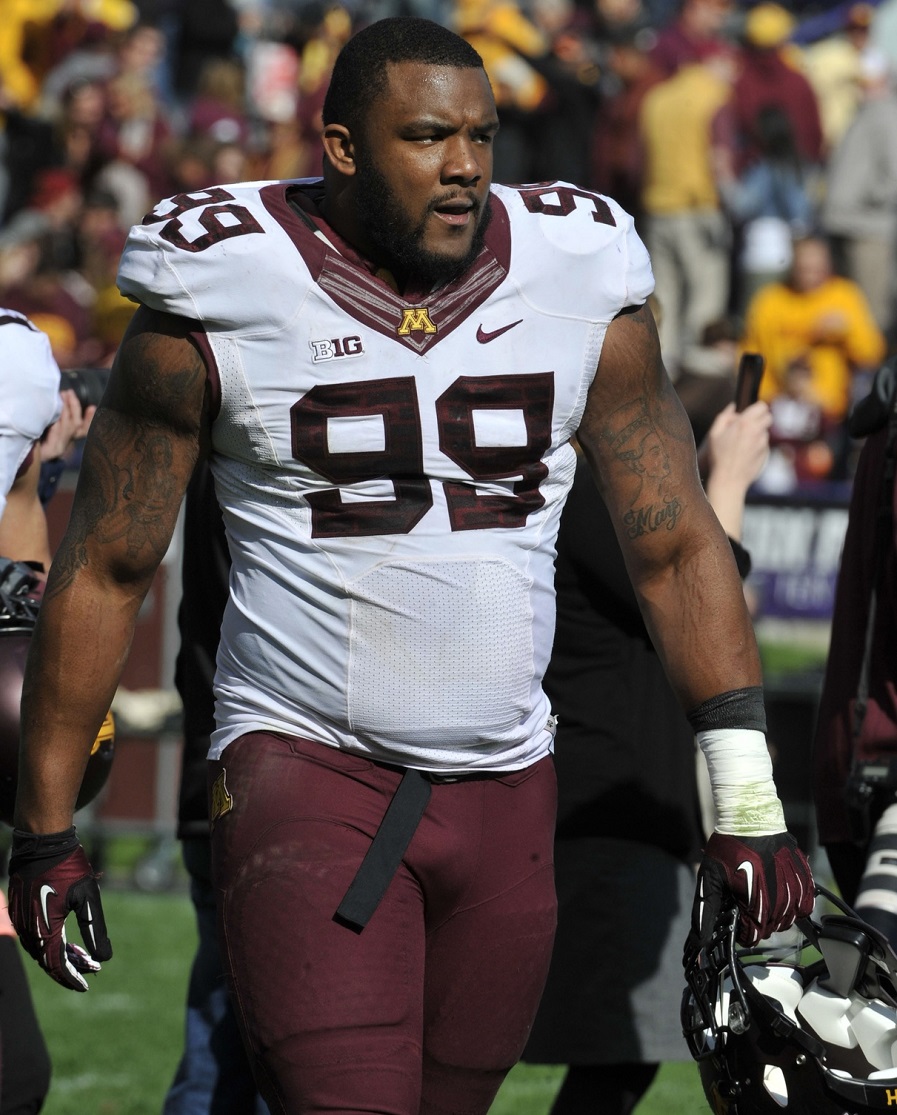 (USA Today Images)
 Ra'Shede has all of the measurables. Benches 465 pounds, squats 500. OK, you might expect that for a guy as big and powerful as he is. Get this, though — the 6'6" 311-pound lineman also leaps 36 inches on his vertical, can windmill a dunk and clocks 1.57 seconds in the 10-yard dash. On Bruce Feldman's 2013 physical "Freaks List" for CBSSports, Hageman is No. 2 (behind only Jadeveon Clowney). After eight games, the Gopher often referred to as a "monster" and "beast" slid up on ESPN draft analyst Todd McShay's rankings from a projected third-round pick to the late first round. "He's got a tremendous future," Gophers' head coach Jerry Kill says. "He's a guy a lot of people will want to get their hands on, as long as he stays on track and does what he's asked to do here."
That's the refrain. Ask past coaches, current coaches, his parents, they all say the same thing: great future, as long as he stays on track.
He can't escape the caveat. Because what drives him could also destroy him.
Talk about two roads, that's the story of this kid's life. He's had false starts along both — fits and lurches down the one that ends for so many black American males born into impoverished, drug-addled families in early death or lifetime incarceration, and leaps and slips down the other toward athletic stardom, generous paydays and Sunday glory. Seems every step of the way he comes back to the fork, where he has to choose his path all over again.
That's where the anger is. All the hurt from having a crackhead for a mom, a dad who died when Ra'Shede was a toddler, of bouncing around foster homes, not having birthday parties like "normal" kids — all that is distilled into a fierce pilot light of anger in his belly. Only football licenses him to release his rage, a powerful force that he consummates in crunching hits. "When I'm on the football field, I always have that anger I had as a child," he says. "I don't want to talk to nobody. I'm ready to go all the way."
Off the field, his anger has cost him, flaring into altercations that could have sidetracked him, ending his career — or even his life — before it got started.
On a weekday morning, he shuffles slowly, as though nonchalant, through the wood-paneled halls of the Gophers' football complex. Clad in a maroon Golden Gophers hoodie and black sweats, he molds his bearded face into a blank expression. Some guys have emotion bubbling all over their features; Ra'Shede's doesn't give away anything, his expression hardly changing. He is playing the role of the elite athlete dutifully reporting to his next interview, but there's an ambiguity in his step, something markedly hesitant in the splayed gait of his Nike sneakers on the maroon carpet.
He's so big he was never small, not even when he was a child. Without his helmet, his head seems to have outgrown his ears, small stubs pushed to the sides. Ra'Shede's always been the tallest guy in the room and on the field. And he's acutely aware of his size, something he embraces, for better or worse. He picked the biggest number because it fits him. "I'm different, with my size, my background," he explains. "I know wherever I go, I'm going to stick out. I'm not your typical human being because of where I've been."
* * *
The story started in Lansing, Mich., but his mom moved to Minnesota before he was old enough to form memories of the first place. When her addiction kept her from caring for Ra'Shede and his younger brother, Xavier, authorities placed the two boys into the state's foster care system. They bounced around to a dozen different homes. Ra'Shede finally thought he'd found his way out when they placed him in a "permanent" home, but then his new parents split up and he got dumped back into the system. "I missed that childhood I saw other kids having, birthdays, Christmas," he says. "I didn't have Christmas until I was adopted."
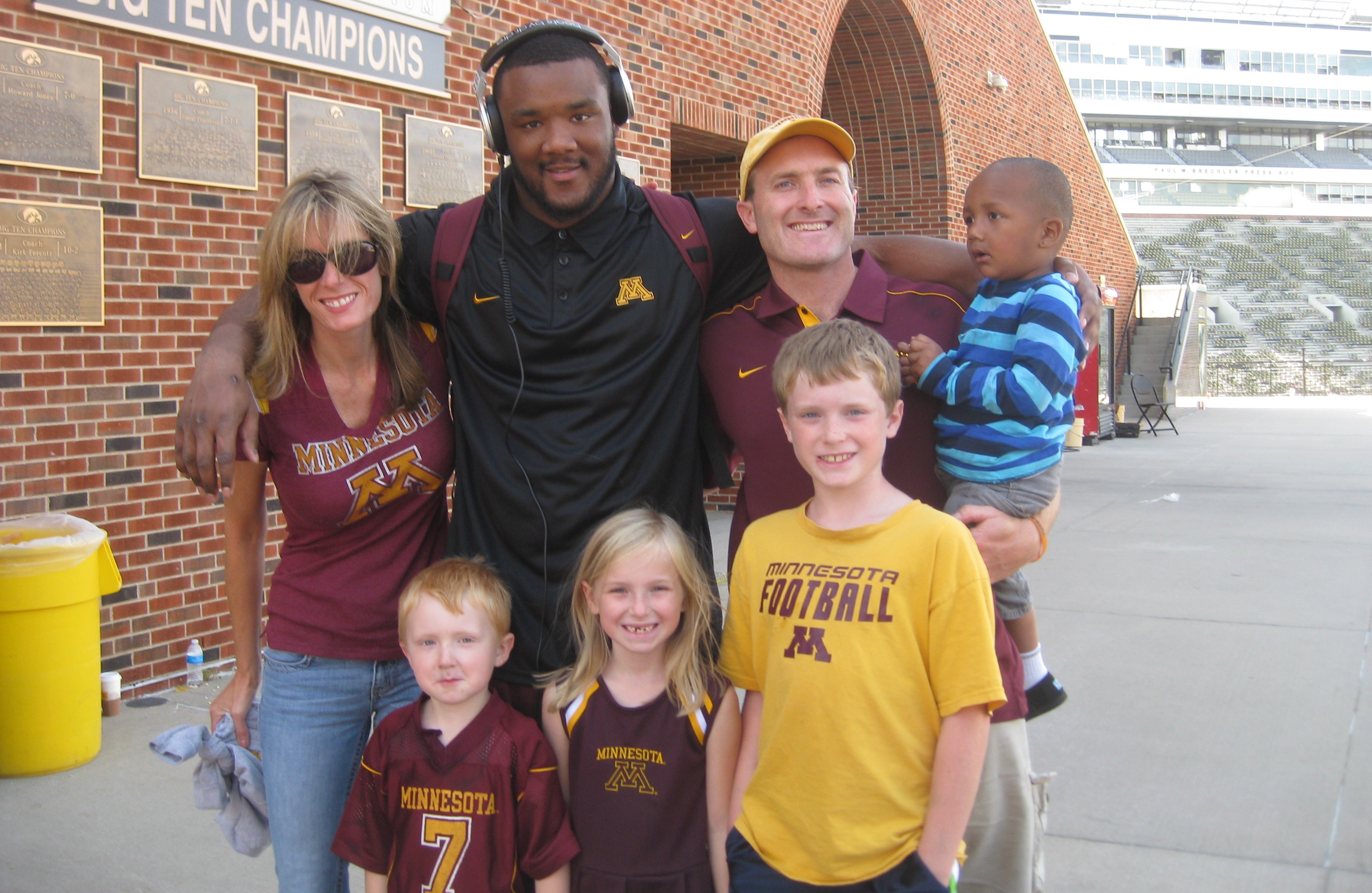
Enter Jill Coyle and Eric Hageman, two idealistic 20-somethings fresh out of the University of Minnesota law school, white newlyweds ready to start a family by adopting. They first saw Ra'Shede in a video where the 7-year-old said he wanted a family that would let him play football. Jill and Eric met him and Xavier, 5, soon afterward at Hennepin County's 1997 Christmas party for older foster children.
The social worker warned them: The boys had issues, learning disabilities. Ra'Shede's anger was labeled Oppositional Defiant Disorder and he had difficulty trusting others. But the boys needed a home, a family. Within two months, they had moved in with Jill and Eric. Their adoption was finalized by the end of 1998.
On the eve of the Nebraska game, the couple recounts Ra'Shede's childhood. Eric Hageman sits on the living room couch of their Minneapolis home. He's trim and bright-eyed in a light blue button-down Oxford. Jill sits on the other end of the couch, attractive with long brown hair and wearing fashionable leather boots. Their 6-year-old biological son lies on the couch between them, his head on Eric's thigh. A pair of dogs wrestle on the carpet nearby. Their other two biological children still at home (a boy, 11, and a girl, 8) busy themselves elsewhere in the red brick house across the street from Minnehaha Creek. Eric represents plaintiffs in personal injury cases. Jill is general counsel for a suburban school district. Their home has the feel of comfortable chaos.