* * *
"you're never going to be able to drive across another bridge without looking over the side."
At 7 p.m. that night, nearly every BASE jumper is packed into a ballroom at the hotel. Jason Bell, the jump coordinator, asks the new base jumpers to raise their hands. "You're gonna be scared," he says, "but you're never going to be able to drive across another bridge without looking over the side."
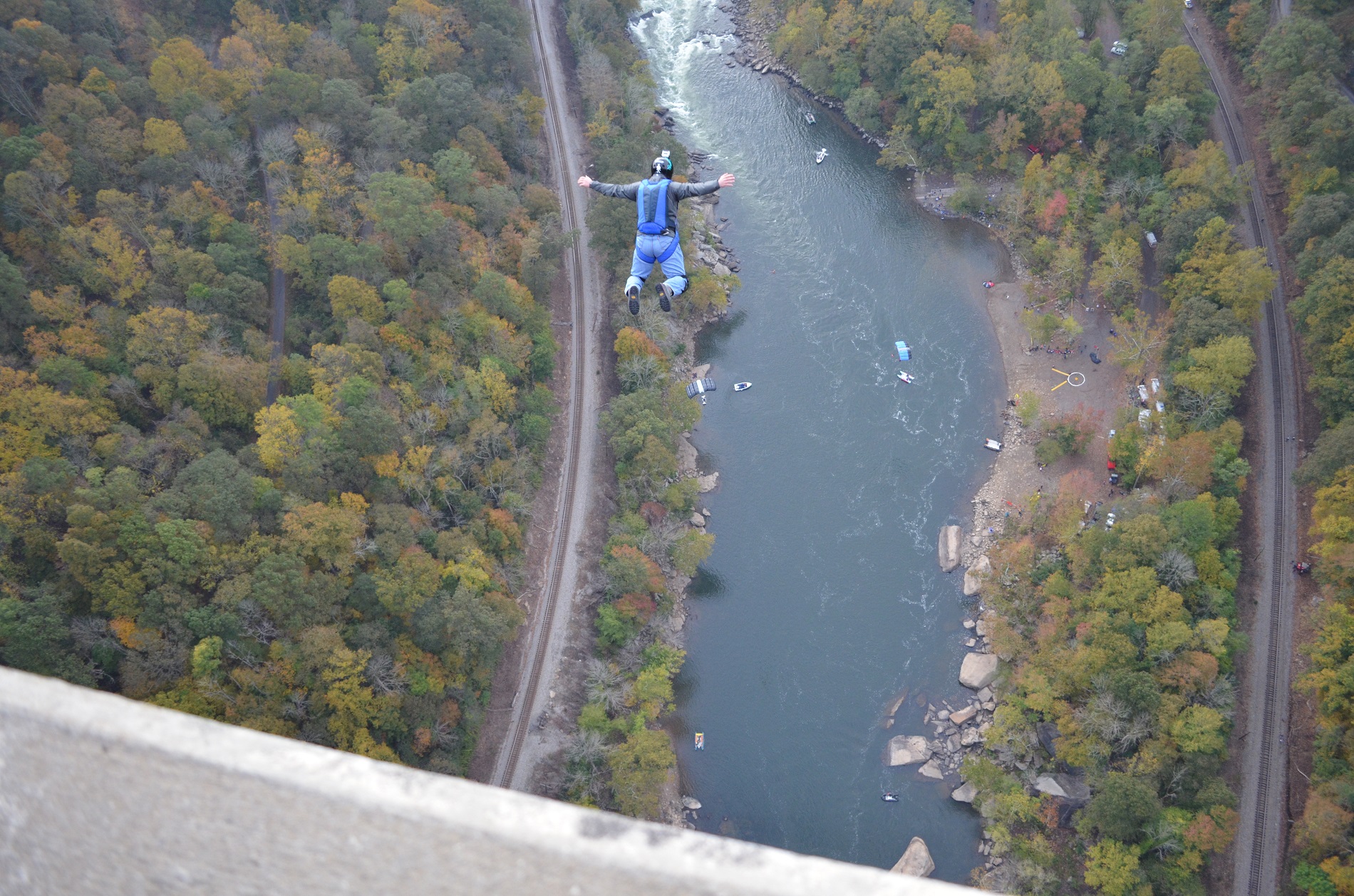
Bell goes over everything a jumper needs to know for the next day. The New River is running a little low, so if you're going to land in the water, aim for the middle. Once you land, get away from the beach. Somebody is probably only a few seconds behind you.
He rattles off some statistics. There are more than 450 jumpers registered. Only 15 percent are first-timers. Only 12 percent are women.
If you get hurt, and have to ride in an ambulance, someone will cut off your badge. You're done jumping, Bell says. In the past, some people figured out that an ambulance ride was the fastest way to the top. Once they got there, they'd say they felt better, run out to the center of the bridge, and try to jump again.
Be nice to the park rangers and state police, he says. He's been working for eight years now to make BASE jumping legal not just once a year, but once a month. Bell is helping others prepare for a meeting with the West Virginia Division of Highways in a few weeks. They're going to ask them about jumping from the metal catwalk that runs underneath the bridge. It wouldn't interfere with traffic. And it'd attract jumpers year round. A lot of conversations that start with, "You know what they REALLY oughta do ..." end with talk about how cool it would be to jump legally here year-round. But it's a long shot. Still, as he talks about it, the meeting explodes in cheers and applause.
Then, to the list of no's. No cutting in line. No cussing. No nudity. No adult toys. "Yes, these have all happened," he says. And no "Rodriguez chants."
Bell doesn't elaborate, but he's referring to an incident in which Pepe Rodriguez of The Rodriguez Brothers' skydiving club stood on the platform about a decade ago and yelled out, "Who are the Rodriguez Brothers?" As he leaped, thousands of people who knew about the club and its exploits yelled out the correct answer: "Fuck the Rodriguez Brothers!" ESPN was there. Broadcasting live. By the time Pepe hit the beach, Bell had already ordered his badge be cut.
"there was tits, there was dildos, there was crazy fuckin' shit like you wouldn't believe. Now it's all 'family.'"
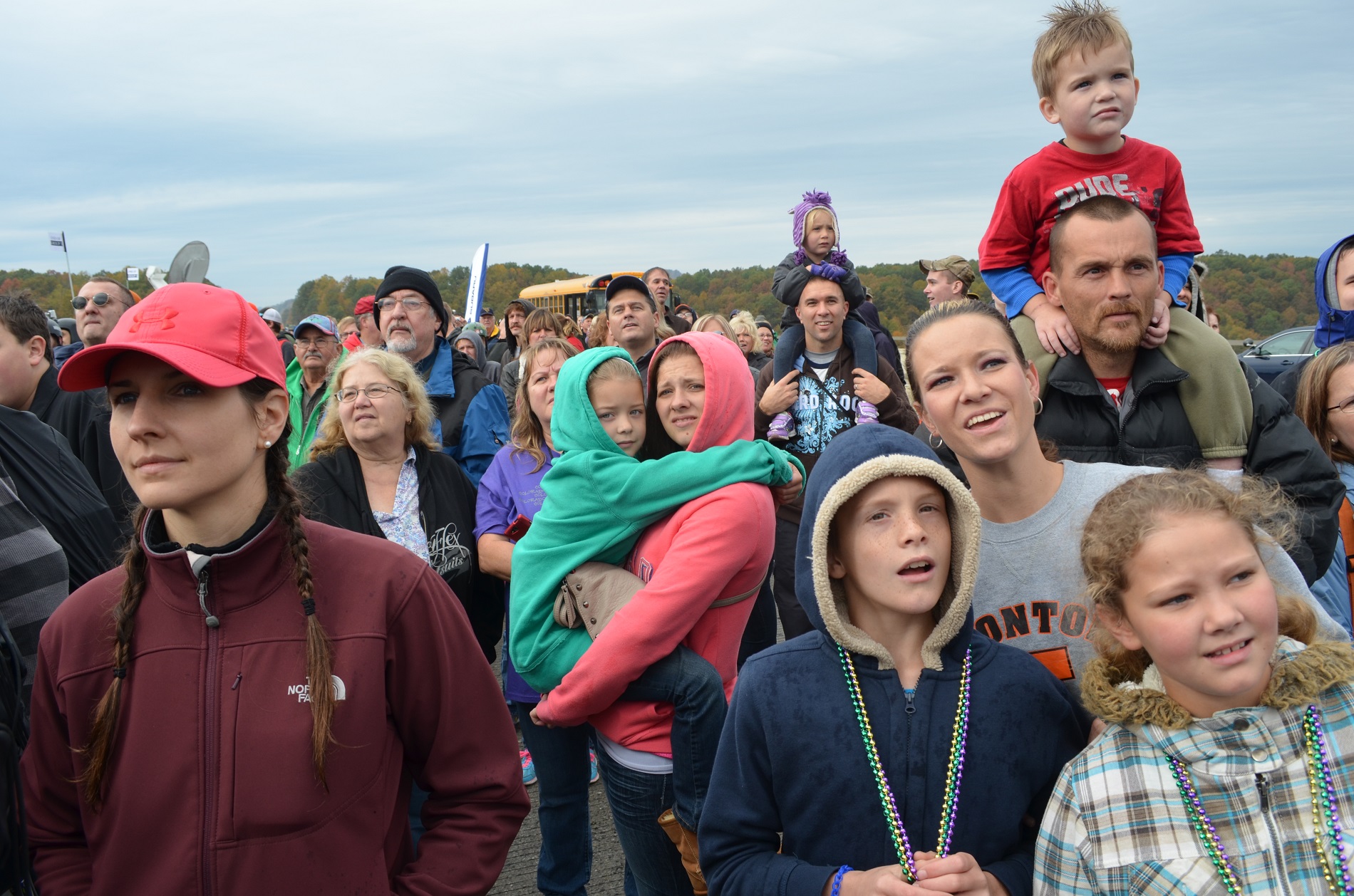 Onlookers enjoy the family-friendly environment.
"Now, CNN's out there," Moe Viletto says later to a group of jumpers in a circle around him. Bridge Day used to be different. "Before, there was tits, there was dildos, there was crazy fuckin' shit like you wouldn't believe. Now it's all ‘family.'"
For Moe Viletto, BASE jumping is supposed to be fun, not a cheap rush. It is not about making a video that you can upload to Facebook or Twitter. "We are the Me Generation. Me me me me me me me. I can't fuckin' stand it," he says. "Those are the ones that are fuckin' up the illegal sites. Those are the ones that are going to jail. Those are the ones that are dying. Which I have no problem with. You're gonna be an asshole? You're taking up space on the planet."
Death, whether you're an asshole or not, is part of the sport. When Carl Boenish died during a jump in Norway in 1984, Viletto was the one who ended up with his chute, still soaked in blood and gore. He crawled inside each cell, trying to figure out what went wrong. He thinks one of Boenish's deployment brakes, which slow the canopy's opening, broke, shooting him back into the face of a cliff. Death has come over and over again. "I have a phone book from 1971," Viletto says. "Almost every single letter in the alphabet has a dead person, a friend of mine, next to it."
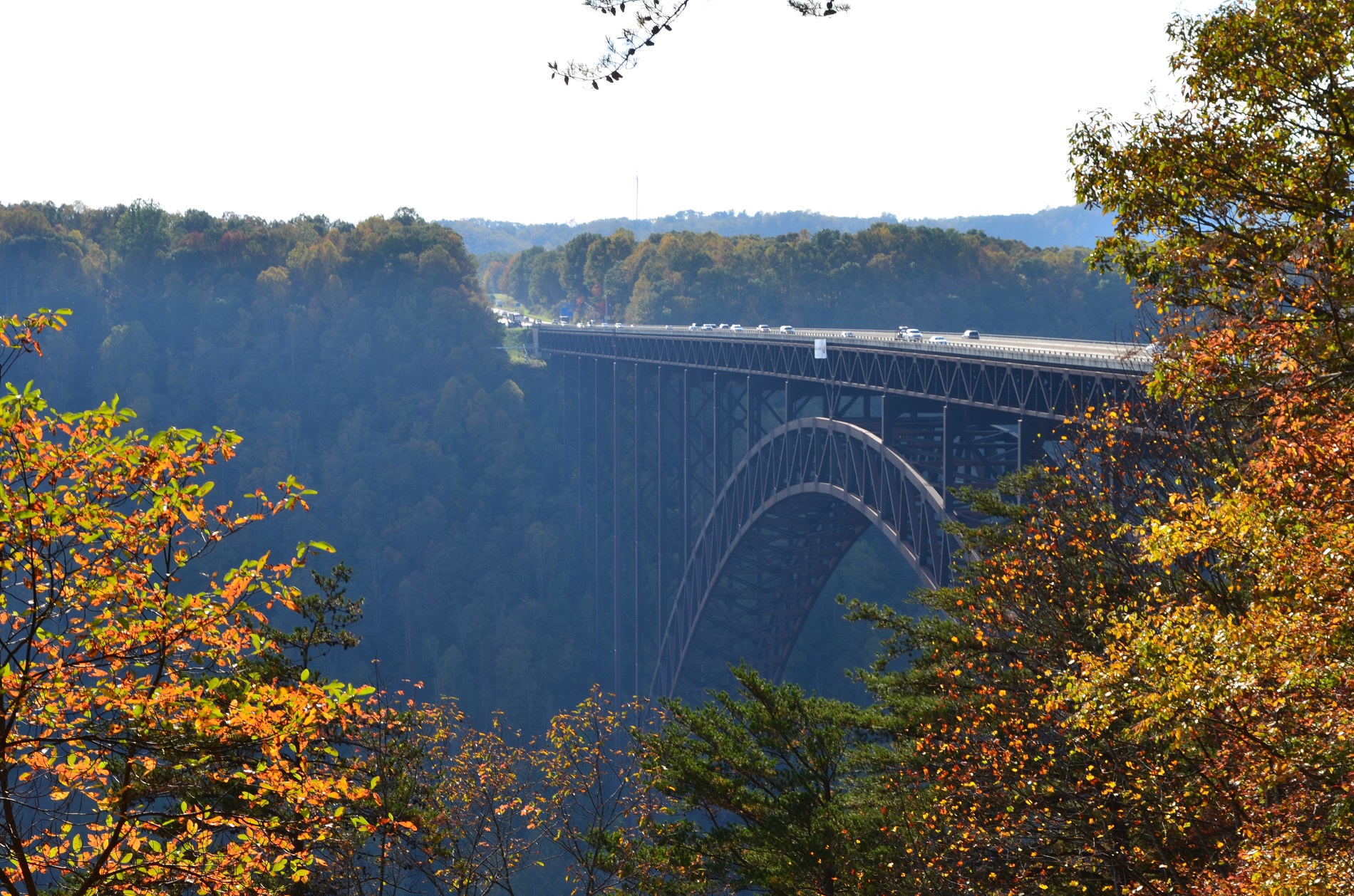
It's safer now, and that's good. Viletto believes in safe. Over 33 years, only three people have died at Bridge Day, from drowning and from parachutes that opened way too late. The gear checks at Bridge Day are thorough. Almost every year, volunteers catch mistakes that might have been deadly.
Still, parachuting accidents have the perverse effect of bringing more people into the sport, Viletto says. The edginess is an attraction. "All the young punks want to impress their girlfriends, and that's what teenagers do." At one time, they saw it in dirt biking. They saw it in skateboarding, snowboarding, rock climbing. And some people see it in BASE jumping.
* * *
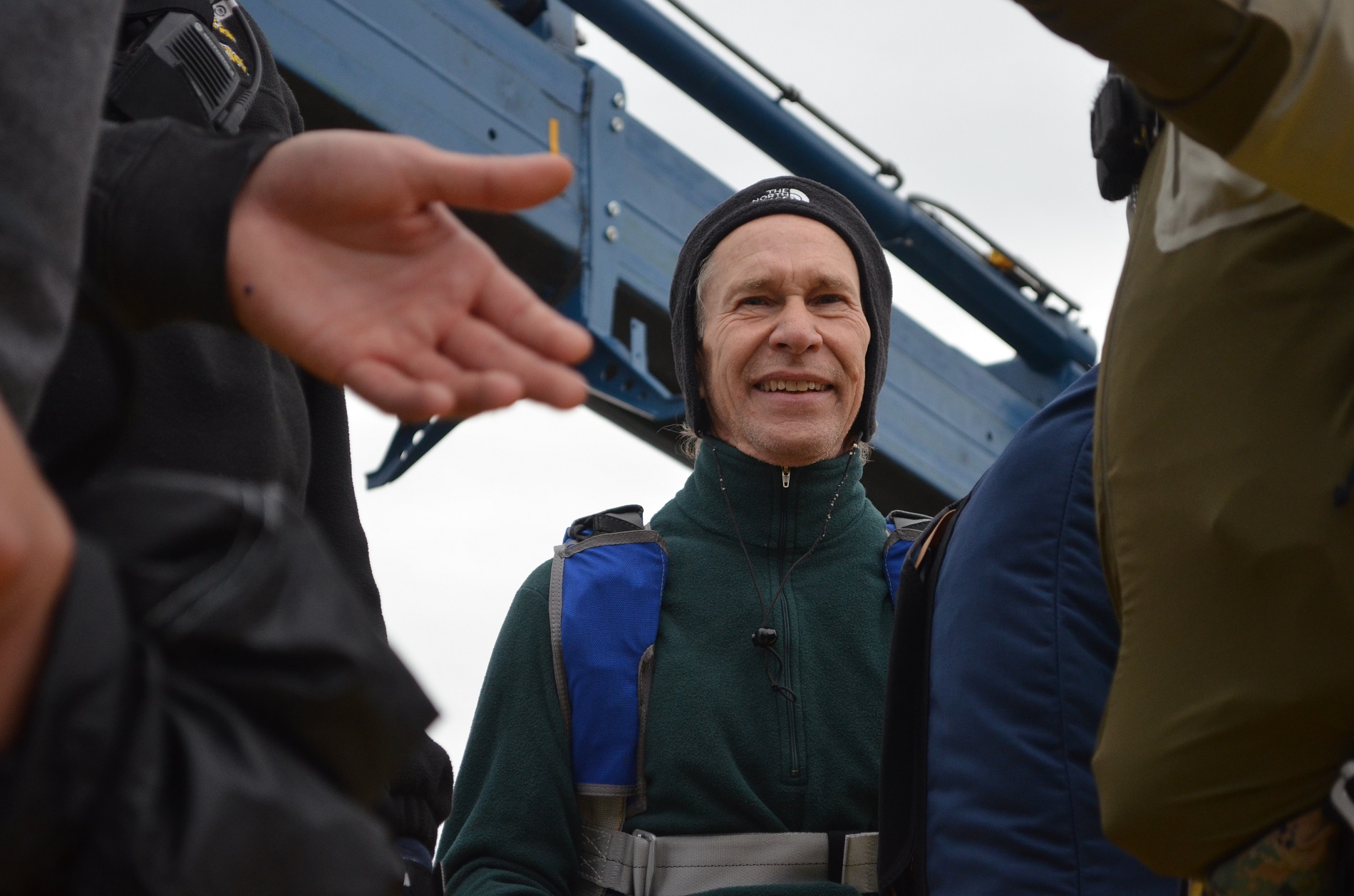
Donald Cripps has a motto: Guns, women and skydiving. Any one of them can kill you.
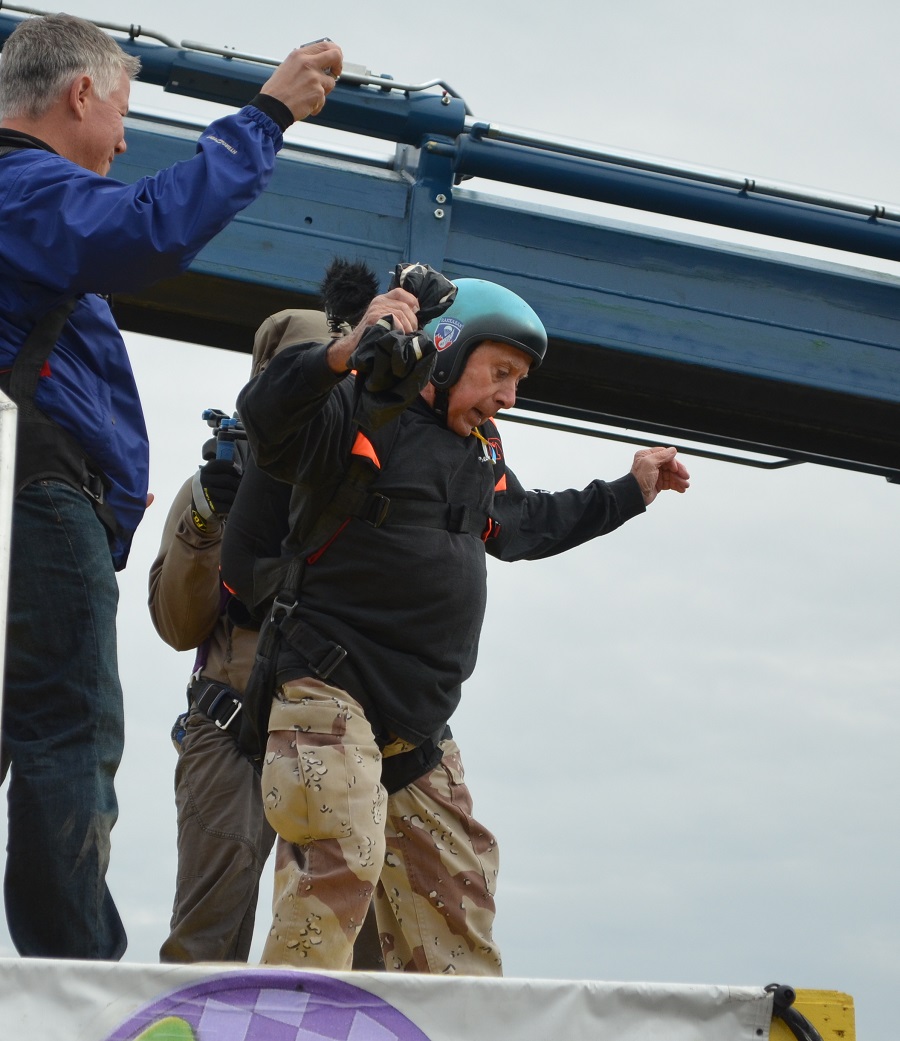 Donald Cripps, Bridge Day's oldest jumper.
He's been jumping since his days with the 82nd Airborne's pathfinder team in Korea.
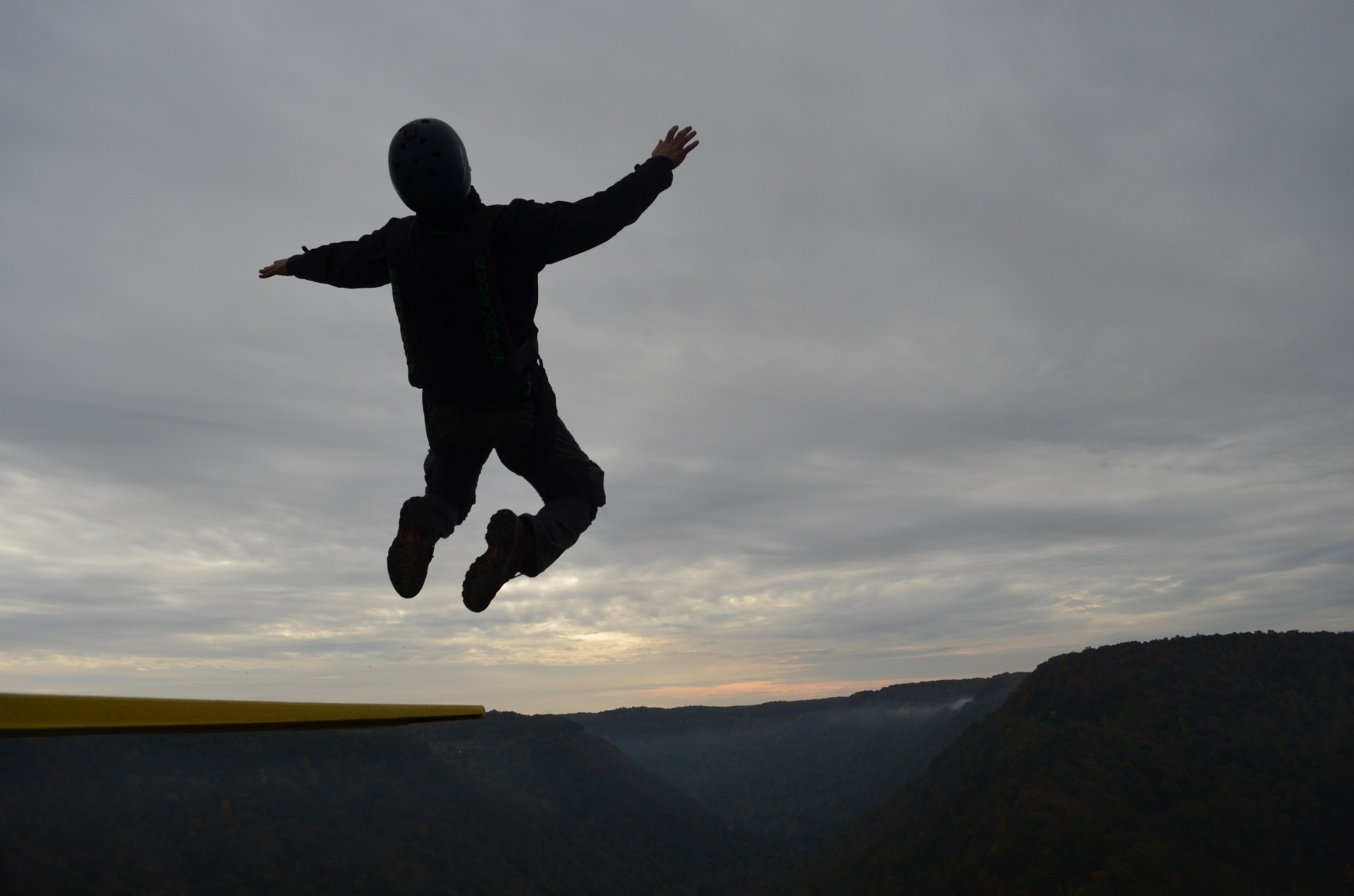
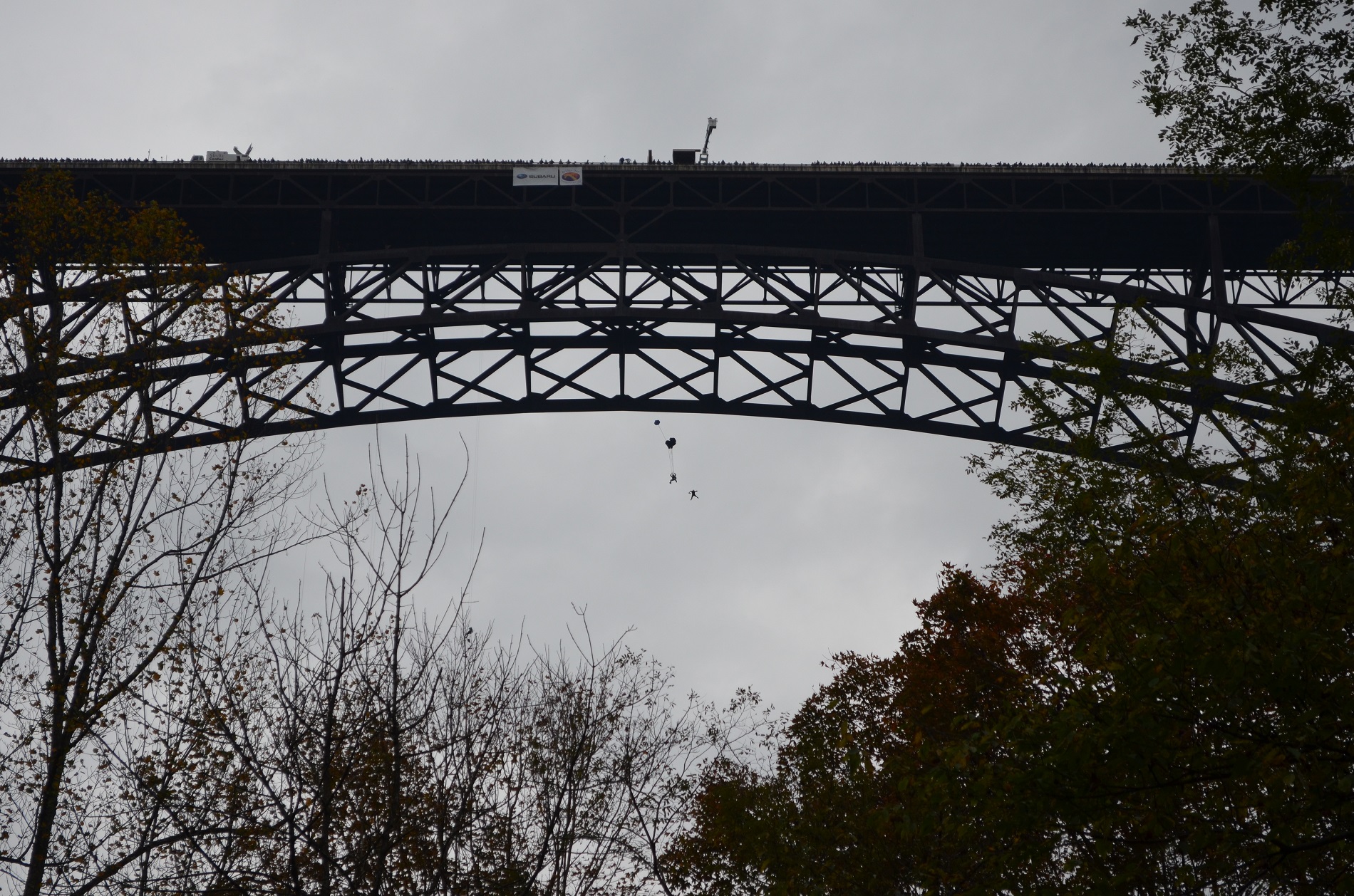
On Saturday morning, Cripps walks up a set of stairs, a blue helmet on his head, a black pilot chute in his hand. A volunteer on the bridge in a red pullover vest scans his badge and checks his gear one last time. Then Cripps turns around and faces the crowd that's assembled behind him. "Hope you all have a nice day," he says, calmly and genuinely. He walks up one more flight of stairs to a platform that leans out over the edge of the gorge. He stands at the brink, raises his arm, and leaps.
Donald Cripps is 84 years old.
Later, he'll say he could have had a better jump. The platform was slick from rain showers earlier in the day. There were interviews. There was pressure. He knew the water in the New River, 876 feet below, would be cold. All of that was running through his mind. He slipped. He came out a little head down. His feet twisted up behind him. But he waited a few seconds. Then he threw his pilot chute. His blue canopy opened above him. Perfectly.
This is Cripps's third year jumping at Bridge Day, and he says he had better jumps at the last two. He's been jumping since his days with the 82nd Airborne's pathfinder team in Korea. After he left the military two decades later, he started skydiving again. For fun. He now has 3,570 jumps under his belt.
A couple years ago, some guys at his drop zone started talking about BASE jumping at Bridge Day. Sounds like something I could do, Cripps thought. His glaucoma makes long-distance drives too tough, so he flew up by himself from Pensacola, Fla. His knees are sore. But here he is, 84. The oldest jumper on the bridge.
Earlier in the morning, around 9:30, Cody Adams made his jump. As the last of the fog burned off, he faced the crowd and pushed off. No gainer. A minute later, he landed on the wrong side of the river, on the railroad tracks.
Two hours later, it's his friend Andy Smith's turn. "This is going to be so fucking awesome," he tells himself. Over and over, he raises his arms and fakes the throwing of his pilot chute, just like he will when he jumps. His hand shakes. He walks up to the platform. Viletto puts his hand on Smith's back. He jumps.
A few minutes later, a woman dressed in a blue sweatshirt and black helmet walks to the end of a yellow diving board, turns around, bends her knees and does a backflip. James, the guy who landed in the thorns the day before, walks to the end of the platform, pushes himself up into a handstand, then pushes himself out into the void. Every so often, a pneumatic catapult launches a jumper 20 feet into the air, over the side of the bridge.
The people who have jumped before go quickly. The first-timers hesitate. The volunteers on the platform tell them to walk to the edge and look down. They show them where to land. They tell them about the wind.
There are a few last instructions. Don't look down anymore. Keep your head up. Focus on the horizon. Have a nice jump.
Nobody walks down the stairs. They always go over the edge. They always jump.
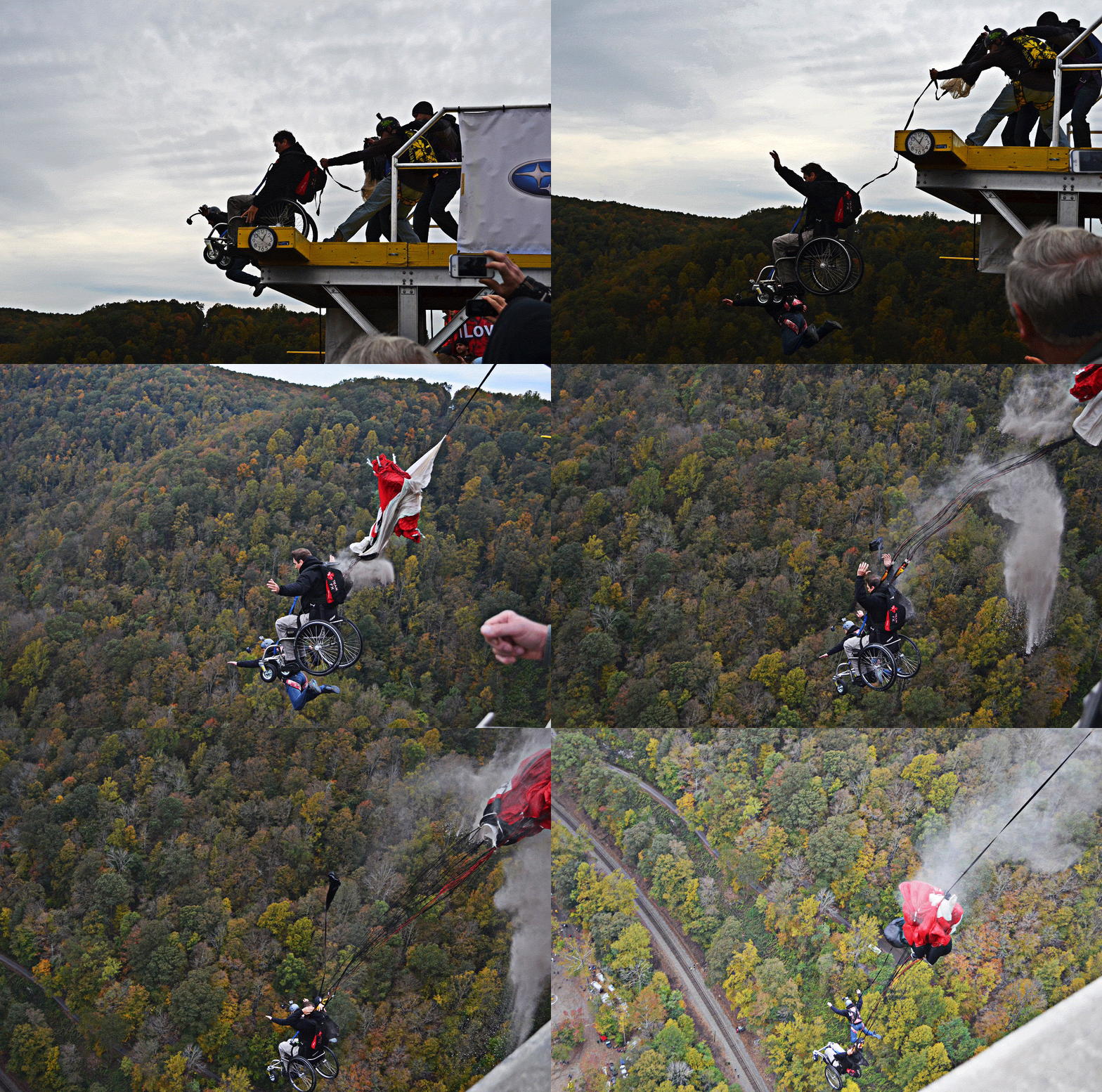
Bertrand Cloutier goes to the edge. Next to him is Lonnie Bissonnette, the Canadian who was paralyzed in a skydiving accident. After an interview with the Today show, both go over the side, and a gray cloud of ashes bursts out when they release their canopies. Bissonnette makes a perfect landing in his wheelchair. His arms go up in victory. The cloud dissipates.
Once all of his students have jumped, Viletto makes the leap, quietly, indistinguishable from the others.