It's pretty amazing, the similarities between tennis and football: the importance of footwork, the anticipation of what your opponent is going to do, the ability to forget about a bad play and move on.
But in football I can look at 10 other guys on the field and say, hey we need to pull it together. In tennis you're out there by yourself and you have to correct yourself and figure out what you're doing wrong ... or you're going home.
—former All-Pro defensive end Michael Strahan to ESPN tennis commentator Pam Shriver at the US Open
Players come to the US Open lugging baggage, mental baggage, that is, the kind packed with memories and urgent needs, with apprehensions and expectations, with barely acknowledged terrors and stubborn belief. As porters of their own histories, the top guys - those few with a legitimate shot at the title - step onto the court buoyed or depleted by the recent past, or determined to avenge it or hoping to forget it.
Like it or not, that past is inseparable from the present, thanks to a rankings system that operates on a 52-week rolling scale causing players to lose points unless they maintain or better their results from the previous year and assuring that a player's most constant opponent is himself.
But a year is a dauntingly long time in a sport blighted by myriad pitfalls that range from unfavorable draws to finger blisters and windy weather. Consequently, as the 2013 US Open began, circumstances bore scant resemblance to the way things were at the start of the Open the year before. Back then, Novak Djokovic was the defending champion, Roger Federer was the world No. 1, Andy Murray had never won a Grand Slam, and Rafael Nadal was at home in Mallorca, nursing damaged knees and watching the event on television.
As this year's Open got underway, Djokovic was No. 1, Federer was No. 7, Murray had two Slam trophies on his mantelpiece, one of which signified his status as the US Open's defending champion, and Nadal, fully recovered, was undefeated for the year on hard courts where he was producing the most aggressive tennis he'd ever played.
Anyone who knew anything about tennis would have told you the trophy was destined to be lifted by one of these four men. This was an eminently safe assumption given that, with the exception of Juan Martin del Potro's victory at the 2009 US Open, they'd collectively won 33 of the last 34 Grand Slams, a staggering affirmation of unyielding dominance, especially when you consider that the previous grouping of 34 Slams was won by 18 different players.
THE CONTENDERS
FEDERER
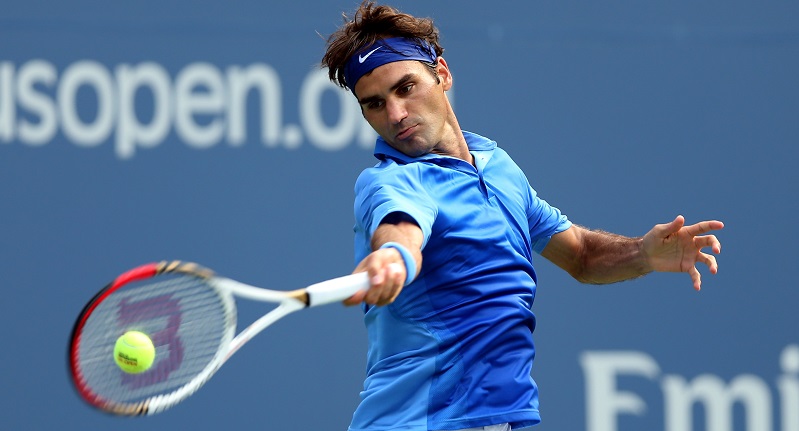
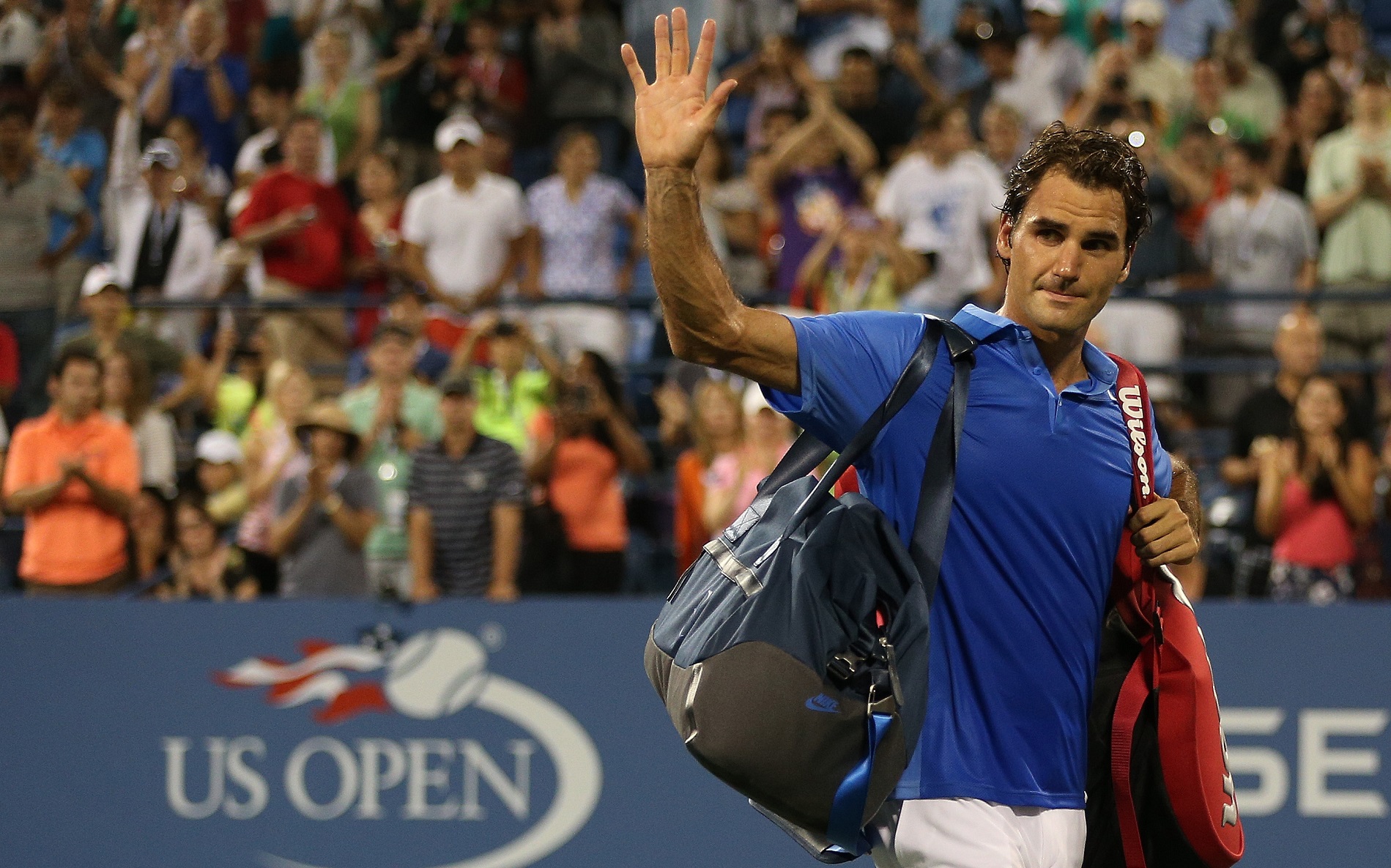
No one has won more Slam titles than Federer, and the 17 he's amassed are the reason he was still counted as one of the so-called Big Four despite the precipitous drop of his ranking to its lowest point since his historic run began 10 years ago. Federer is a five-time US Open champion, but his last victory came in 2008 and if he doesn't snag another title this time out, it will be only the second time in those 10 stellar years that he hasn't won at least one Slam. This season has been one of startling losses and frustrations extreme enough to gnaw at a previously unshakable faith in himself that bordered on arrogance, and it was disconcerting to hear him talk about lacking confidence and to hear reporters insinuate it might be time for him to retire. But Federer was still proud and sufficiently presumptive to insist not only that he'll keep on playing but that he'll win more Slams. This tournament would go a long way toward determining whether, at age 32, he's still the viable contender he claims to be or if, in the biting phrase of the commentator Mary Carillo, he's simply "pathologically optimistic."
MURRAY

When Andy Murray reached the 2012 US Open final he'd already been to four Slam finals, losing them all in a manner that left him looking curiously bewildered and ineffectual. Each defeat added to the crushing burden of pressure that accrued to him as the only highly ranked player in Great Britain, the tennis-fixated nation where the sport began and where no man had won a Grand Slam since 1936 when the much-vaunted Fred Perry took home the last of his three Wimbledon trophies. Murray's multiple defeats gave rise to mass indignation in the British press, expressed in countless articles bearing cloying headlines like one that read, "Will Andy Murray ever give the nation the victory it craves?"
For half a dozen years that question had been the elephant in any room that happened to contain reporters and Andy Murray. He had dealt with it gracefully, wisely concealing his true feelings about it until his two Slam titles abated that cumbersome craving, at least temporarily, and he became willing, for the first time, to tell reporters how that question made him feel, "Every day you get asked, ‘When are you going to win Wimbledon?'," he recalled. "'Why have you not won a Grand Slam?' And every question makes you doubt yourself more ... It does make you feel a bit like a loser."
You can see why, when Murray won the US Open, defeating Novak Djokovic in the final, no one was more relieved than he was, with the arguable exceptions of his girlfriend and his mother. He beat Djokovic again in 2013, when he finally triumphed at Wimbledon, a victory so longed for he could not believe he'd actually attained it. Even after receiving congratulations from the queen and visiting with the prime minister, he would wake in the middle of the night and, uncertain he'd prevailed, put on a video of the last desperate points he'd played. "I had to keep watching the end of the match," he told an ESPN reporter, "to make sure it was real."
As defending champion at the 2013 Open, Murray faced a new sort of pressure; having spent the first part of his tennis life proving he has what it takes, he's fated to spend the rest of it trying to top his own achievements.
DJOKOVIC
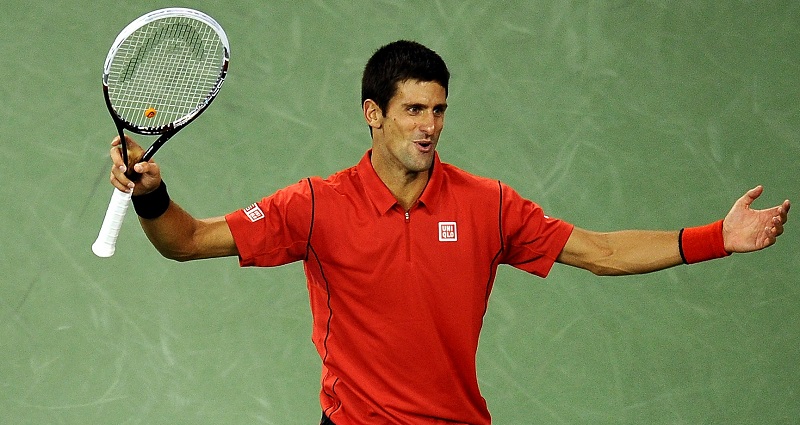
When Djokovic won the US Open in 2011 it was his third major win in a year in which he would ultimately go 70-6 and compile one of the more impressive seasons in tennis history. "Djokovic is playing superior to the rest," said Nadal's coach, his uncle Toni, "I hope it does not last forever."
And of course it didn't. Tennis is a game of inches, and suddenly, possibly for no particular reason other than that Djokovic is human, balls that once landed smack on the lines were sailing just beyond them. At the start of the 2013 Open he hadn't won a title since April when he defeated Nadal in Monte Carlo on clay, a telling prelude, or so he assumed, to achieving his goal for the year, which - as he declared repeatedly - was to win the French Open, the only Grand Slam title he lacked. A win at the French would add his name to the list of seven players - Nadal and Federer among them - who'd won the Career Grand Slam, which results from having the skill and versatility to win at least once at all four Slams: the Australian Open and the US Open, which are played on hard courts, Wimbledon, which is played on grass, and the French Open, played on clay.
But at the French, he lost to Nadal in a ferociously contested five-set semifinal, and then went down in the Wimbledon final to Murray with minimal opposition. For most players, making the finals at successive Grand Slams would constitute a banner season, but for Djokovic, losing at those finals was a harsh disappointment made worse by commentators who pose questions he'd rather not answer. "What have you been working on?" one of them asked, "Some of your shots weren't working as well as they once were..."
Djokovic had been ranked No. 1 for the better part of two years. But he needed to win the Open or he'd likely lose that ranking to his nemesis Nadal - the person he'd least like to attain it. The Open was his last opportunity to turn around an unexpectedly demoralizing year in which he's learned that being successful doesn't feel all that great when you used to be dominant.
NADAL
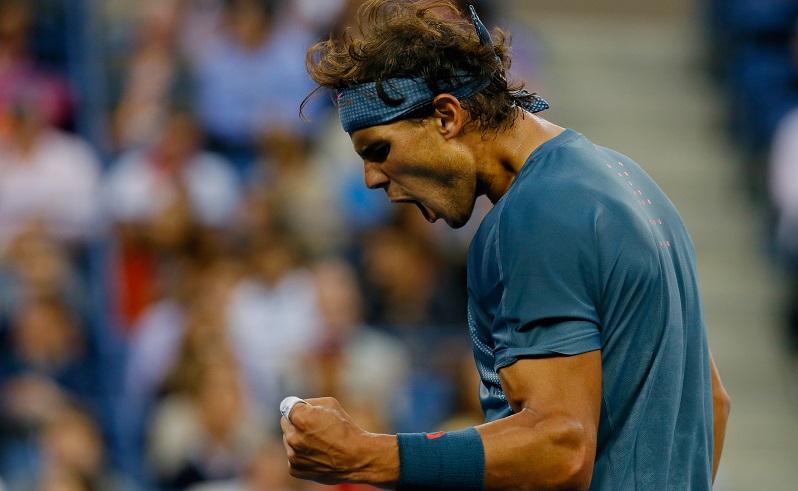
The big story of the summer was the unanticipated resurgence of Rafael Nadal, clay court master, longtime kryptonite to Roger Federer and arguably the most tenacious competitor in any sport, one whose game was described by Andre Agassi's former coach Brad Gilbert as "an education in pain." Nadal's seven months of rehabilitation from knee tendinitis and a torn patella tendon made for an anxious and difficult time during which he tried not to dwell on the possibility that he might never again play at a high level. He returned to the game in February 2013, looking and feeling apprehensive even as he reached the final in the first tournament he entered. But he lost to Horacio Zeballos, an Argentine journeyman ranked No. 73 who, early in the day, had tweeted that he was about to play a match against "God" and, by sundown, had pulled off an upset that shocked everyone but Nadal.
But from then on, Nadal would furnish a different sort of shock as he made the finals of all but one of the next nine tournaments he played, winning seven and establishing a record number of wins for a male player at a single Grand Slam with his eighth victory at the French Open a few days after his 27th birthday.
But most surprising was his undefeated record at the three hard-court Masters events he played, including back-to-back wins at the tournaments immediately preceding the Open, a feat regarded as nearly impossible and accomplished only by three other players: Pat Rafter, Andre Agassi and Andy Roddick.
As the Open began, Nadal had a winning record against every other seeded player and, with one exception, against every player in the draw he'd played more than once. He was deemed the man to beat, and even Djokovic was saying Nadal had been the best player of the year. What remained to be determined was whether he had peaked too soon, or whether his astonishing roster of wins was the harbinger of what would be a victory all the more momentous for being so unlikely.