The evening of May 20, 2013 was perfect for a run. The clear blue skies above Champlain, N.Y., a town of nearly 6,000 people on the Canadian border less than an hour south of Montreal, faded slowly toward dusk. The previous day's rain left a pleasant trace of humidity in the 63-degree air. The sun officially set at 8:20 p.m., but this far north in the late spring, light lingers. Some 20 minutes after sunset, Angela Bechard recalls, it seemed like mid-afternoon.
Bechard and her best friend, Ashley Poissant, were covering ground, just as they had been doing for the better part of a year. Joined by Bechard's two daughters, 13-year-old Skyler and 16-year-old Kylie, the two women were slowing to a walk after running through the village of Champlain and then to its outskirts, on a lightly traveled rural route called Perry Mills Road. According to Bechard, the foursome, all dressed in black yoga pants, were strung out single file along the pavement's edge. Kylie was about 10 feet ahead of the others, wearing a black and pink top. Bringing up the rear was Skyler, wearing a black short-sleeved T-shirt and neon blue running shoes. She trailed about 5 feet behind her mother, Angela, in a hot pink top and teal blue Nikes. Angela, in turn, was just a stride behind Poissant.
Poissant, who had been running on the white fog line that marked the outside edge of the lane, didn't lead this pack, but she catalyzed the group. The 27-year-old mother of three was a recent fitness devotee — and she embraced exercise with the zeal of the newly converted, successfully convincing her friends to join her. She loved name brands and accented her outfit with a bright yellow Aeropostale hoodie. What really set her apart were her running shoes — hot pink Reeboks with white soles and reflective stripes. "She was all proud of them," Bechard says. "She's like, ‘Look at my shoes, feel these, they're so light. You got to get yourself a pair — they're only $84.'"
Poissant ran because running, and fitness in general, had changed her life.

For Poissant, running was about way more than the gear. "She'd have run in her ‘hooker' boots if she had to," Bechard jokes. Poissant ran because running, and fitness in general, had changed her life. A year earlier, she'd weighed 185 pounds, weight she didn't carry well on her 5'4 frame. "She was down," says another friend, Jane Favreau, "which I believe had to do with her weight." But in the year leading up to May 20, Poissant had transformed herself. In addition to running with Bechard, she did intense Wii Fit workouts alongside Favreau, shedding 55 pounds, and landing a store manager's position at the McDonald's in Champlain. At around the same time she earned her keys to the store, she got the keys to a new car, a 2013 Ford Focus she bought for herself.
And while she was a devoted wife and mother to three young boys — "Her family was her everything," Favreau says — she was now opening up to her friends in ways she hadn't before. They heard more of her dorky laugh that could fill a room, and saw more of her smile that lit one up. "Her self-esteem was through the roof, and with her new body and her new job," Favreau says, "she was golden. Absolutely golden."
What they felt most, though, was Poissant's irrepressible energy, which carried her friends along with her, helping each of them lose weight, too — in Favreau's case, nearly 90 pounds. That energy coerced Bechard and her daughters to follow Poissant's example and end a gorgeous spring day by joining her on a run.
As runners, they were enthusiastic but unschooled. None of them wore reflective tops or safety lights. And they ran in the same direction as traffic, in violation of New York State law. While cyclists are instructed to ride with traffic, pedestrians must "whenever possible" walk or run on the opposite shoulder when sharing roadways with vehicles. The rationale: Pedestrians and joggers have a better chance of averting danger if they stare drivers in the face. As new runners, though, the women didn't trust the rule. They'd run against traffic a few weeks earlier, "and cars would whisk right by us," Bechard says, without slowing down or making room. "We were going with traffic because it felt safer."
They chose to run on Perry Mills for a couple of reasons. First, the rural road between State Route 11 and the Canadian border reminded Ashley of her husband, Matt, the father of her three kids, who used to live just off Perry Mills when they were dating. More important, says Bechard, "there are hardly any cars." Indeed, there's little reason to travel on Perry Mills unless you live on it. Bootleggers used it to move contraband during Prohibition, and the street once led to a working frog farm. During part of the Cold War, the Pentagon maintained an underground nuclear missile silo just off Perry Mills. But the rum-runners, like the frogs and missiles, are long departed.
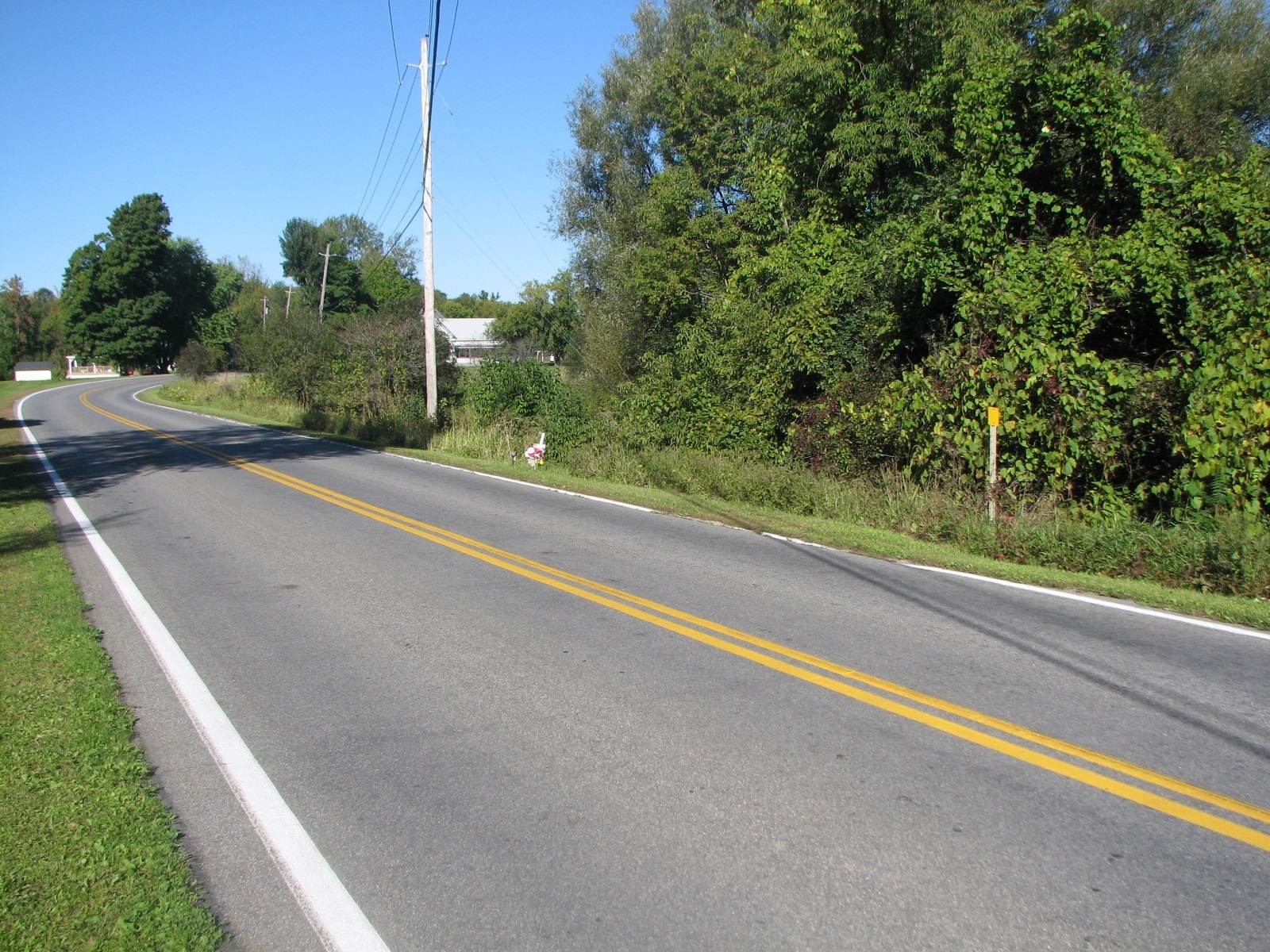
Around 8:40, the women neared a bend in the road just past a split-level home at No. 58 Perry Mills. The speed limit is 55 mph, but the narrow blacktop barely accommodates two traffic lanes. The edge of the pavement is just 2 inches from the fog line; a mere 18 inches beyond that, the dirt shoulder drops off several feet into a rocky streambed, a wet, weedy mess in the spring and summer.
It was here that a black 2009 Buick Lucerne came up behind the four runners. Whenever she'd hear a vehicle approaching, Skyler, in back, would yell "Car!" or "Truck!" and the runners would move over as far as they could. "This one we never heard," Angela Bechard says. The Buick passed Skyler without incident, but then the passenger-side rearview mirror struck Angela in the left arm, spinning her clockwise, destroying the mirror and leaving the area around her left elbow swollen and bruised for weeks.
Poissant was not so lucky. The right front side of the 4,000-pound vehicle drove into her back. The headlight shattered, and Poissant was vaulted back over the hood. She struck the lower corner of the windshield on the passenger side, creating a 2-foot glass spider web, and likely became airborne.
Police photos show a pink Reebok resting about 4 feet from the fog line in the westbound lane; investigators from New York State Police Troop B believe the impact lifted Poissant clean out of her left running shoe. Police found her other pink Reebok lodged in a tree 19 feet off the roadway, some 20 yards beyond the left shoe. In a rocky embankment a few feet off the road, 60 feet from the estimated point of impact, Poissant herself came to rest, her skull and spine fractured, her pelvis broken.
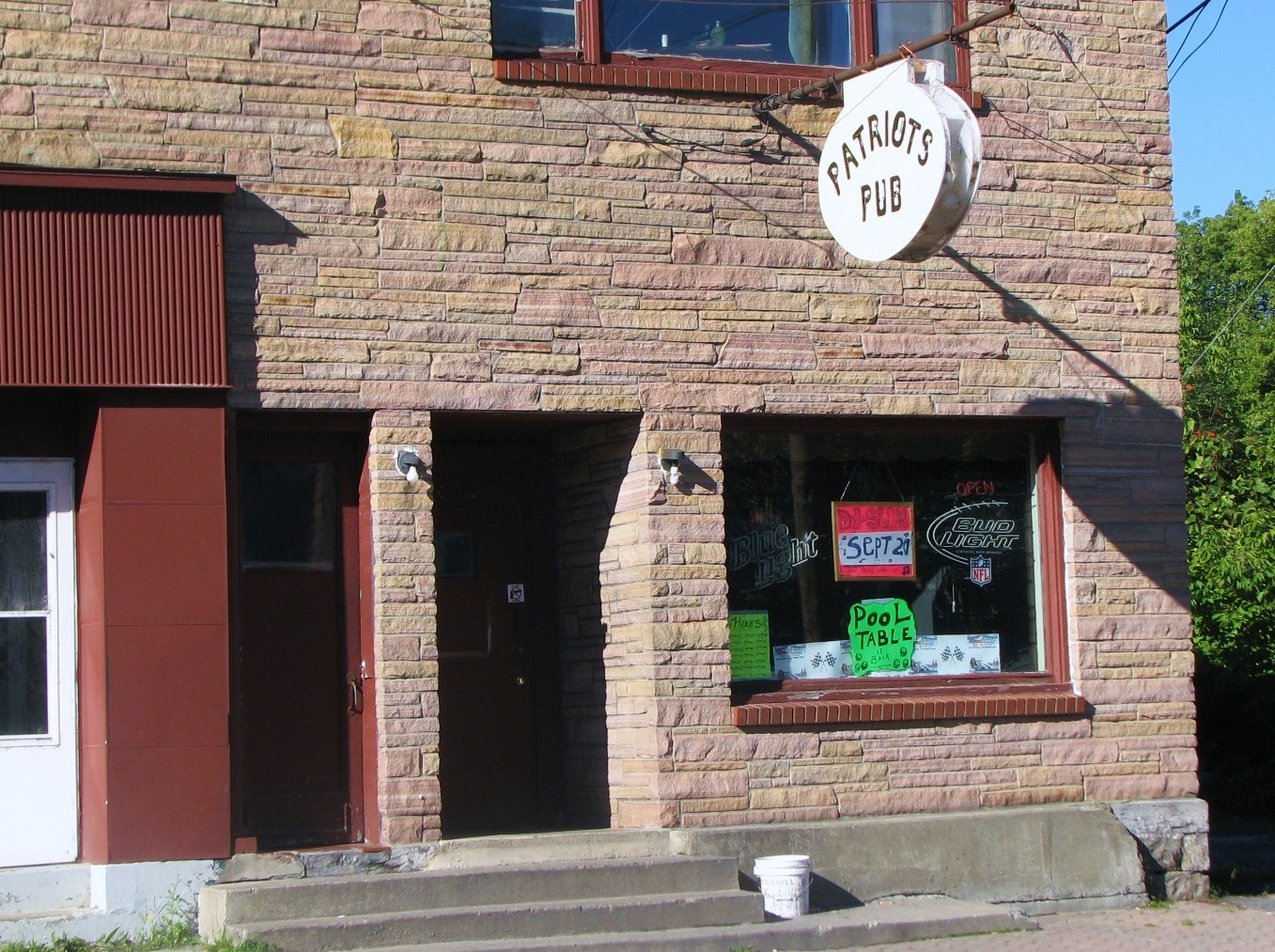
Kylie's phone showed she dialed 911 at 8:41. Police arriving at the scene found glass and plastic debris lining the road for 95 feet, and the battered Buick parked nearby. They also found the Buick's driver, an 85-year-old man named Ronald Trombly, who lived about 10 minutes away in the neighboring town of Mooers. A state trooper reported smelling alcohol on his breath; Trombly admitted to police that he drank two Michelob Lights at the Patriot Pub on Champlain's Main Street and was on his way home when he hit the joggers. He told police the young women were running in the middle of the lane, and that he heard a thud as if "someone had thrown something at the car."
Police took Trombly to the hospital in Plattsburgh, 25 miles away. Technicians drew blood some 90 minutes after the crash, tests of which later revealed a blood alcohol level of 0.12 percent, above the legal driving limit of 0.08 percent.
Meanwhile, emergency medical technicians saw that Poissant's condition was critical, and had her airlifted across Lake Champlain to Fletcher Allen Medical Center in Burlington, Vt., about 40 miles away. They couldn't save her.
Ashley Poissant died in the early hours of May 21, the morning after a perfect evening for a run.
* * *
There's an ongoing culture war in America between fitness enthusiasts and automobiles.
There's an ongoing culture war in America between fitness enthusiasts and automobiles — a quiet, persistent, and almost entirely one-sided battle that creates new casualties every day. The legal skirmish surrounding the death of Ashley Poissant reveals this stark divide. The Clinton County District Attorney and Poissant's friends insist that when an 85-year-old man with an unsafe level of alcohol in his blood and a steering wheel in his hand collides with and kills a 27-year-old woman, it is a crime, a form of homicide. Trombly's attorney says it's a horrible accident, one that the women contributed to by running at dusk on the wrong side of the road. He believes an accident, even a fatal one, doesn't warrant sending an octogenarian to a New York state penitentiary.
So far, both sides have won a battle in court. When the DA's office first brought Trombly's case before a grand jury last summer, the grand jury declined to indict him. Outrage erupted in the community, and an online campaign called "Justice for Ashley" quickly collected nearly 2,000 signatures seeking a second grand jury.
In an unusual move, DA Andrew Wylie declared that the grand jury erred, and he asked a judge to grant the state another chance to indict Trombly. The court allowed the rare mulligan, and in November a second grand jury indicted Trombly on eight counts, the most serious of which are second-degree manslaughter, second-degree vehicular manslaughter and criminally negligent homicide.
Whatever happens in Trombly's criminal case, that won't be the final gavel. Poissant's family members, who declined to be interviewed for this story, plan civil action against the driver. Regardless of what the courts decide, this collision on a lightly traveled, remote road in a sparsely populated part of America won't be an isolated incident.
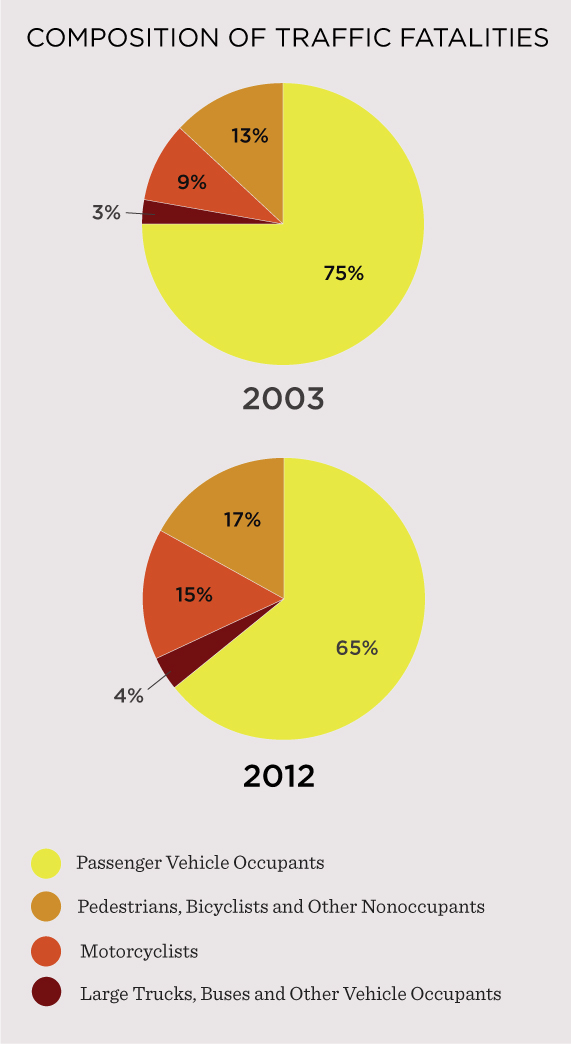 (Data via NHTSA)
Fatal U.S. auto crashes involving "nonoccupants" — walkers, runners and bicyclists — have surged in the past three years of available federal data, from 2010 through 2012. More than 4,700 pedestrians, an undetermined number of them runners, and 726 cyclists died on American roads in 2012. That figure exceeds the total number of U.S. soldiers killed during the Iraq War, accounting for 17 percent of all traffic deaths — up from 13 percent in 2003.
This spike stems partly from a public good: a growing awareness of the benefits of exercise, even in places like New York's North Country, where, like the rest of the country, obesity rates soared for the better part of three decades. State statistics showed 70 percent of Clinton County's population was overweight in 2009, but local health providers and recreation leaders have pushed back hard, encouraging everyday people to exercise. In the last few years, numerous running races have sprung up in the Champlain Valley, and cycling is booming. The phenomenon isn't just for cultural elites and downstaters who own second homes in this scenic region of forests, farms, mountains and lakes. Working-class people are buying in, using a growing recreational trails system and entering couch-to-5K race programs. They're also using roadways to train.
But these athletes confront hazards — aging drivers unaccustomed to sharing the road, young drivers distracted by text messages, and drivers of all ages addled by intoxicants. And public safety experts say too many recreation enthusiasts fail to do all they can to make themselves visible to automobiles.
"Every time I hear these stories, and Ashley's really hit home, these things always horrify you," says Lisa Getty, an avid runner who lives a few miles south of Champlain. "Your first reaction is to come up with reasons why it wouldn't happen to you. But the sad fact is it can happen to anybody."
Getty, who dons fluorescent clothing and flashing lights to do her roadwork, remembers running near her home and diving into a ditch to avoid an oncoming driver who was texting. "To this day I don't know that she ever saw me," Getty says. "I try to take all the precautions I can, but I don't know what you do if somebody's out driving on the road when they really shouldn't be, whether they're texting or they're drinking or just not paying attention."
In just the last two months, 45-year-old Ryuta Yamaguchi of Santa Ynez, Calif., was hit and killed by an 89-year-old driver; 45-year-old James Callaghan, of Laurel, N.Y., was run over and killed by one, and possibly two, hit-and-run drivers on a foggy morning; and Mechanicsville, Va.'s Meg Cross Menzies was struck and killed by a physician who allegedly had a BAC of 0.11 percent. All were runners.
"As the population gets more active," says Lt. John Coryea, public information officer for Troop B, "the likelihood we'll see more of these collisions is going to increase as well."
* * *
Ronald Trombly isn't talking, but at his arraignment hearing, he looks pretty good for 85.
Ronald Trombly isn't talking, but at his arraignment hearing in November, he looks pretty good for 85. He's dressed in sharp blue slacks, a belt, and what appears to be a fairly new blue and white flannel shirt. He's bald on top, with a bit of fuzz emanating from his snow-white fringe of hair. In court, he wears wire-rimmed glasses, and pays close attention to the judge. There's no sign of the shell shock evident in his mug shot the night his car hit Poissant and Bechard.
One of his court filings says he suffers from chronic back problems, and that the crash and his handcuffed ride in a squad car afterward "exasperated" it. The only time Trombly betrayed any frailty at the hearing was when he rose from his seat after his plea of not guilty. He stayed bent at the waist, hunched over, and grabbed the table next to his chair to balance himself. He then leaned against the table with his backside, before gradually standing upright and walking gingerly out the side door of the courtroom — the one criminal defendants use to enter and exit. Still, after the hearing, in the lobby of the county court building, he's alert enough to spot the local paper's photographer waiting for him outside the main parking lot entrance. He and his driver make an about-face, and head for a different exit.
A choice to take an alternate route may have played a part in Trombly's current predicament. On the evening of May 20, Trombly drove to the Patriot Pub, a small tavern on the first floor of a two-story building he himself owns. Trombly never let his age keep him from driving. His Buick had 114,023 miles on the odometer. "He's driven more than a million miles in his life," says his attorney, Stanley Cohen.
Around 8:30 p.m., he left the Patriot and headed toward his home in Mooers using Perry Mills Road, a humpbacked route that Google Maps indicates is more than 8 miles and takes 17 minutes. The faster, most direct way to his house would have been to drive south from the Patriot on Main Street, take a right onto South Street and then jump on westbound State Route 11, a 6.8-mile ride that takes just 12 minutes.