On July 4, 1988, FIFA awarded the 1994 World Cup to the United States. At the time, there was no top-flight professional league in the U.S., and it had been 38 years since the country had participated in a World Cup. As a condition for awarding the tournament, FIFA required the United States to create a new professional league.
A year and a half later, Paul Caligiuri scored one of the most important goals in American soccer history. His strike against Trinidad and Tobago qualified the U.S. for the 1990 World Cup — the team's first since 1950. Although under manager Bob Gansler the Americans lost all three World Cup games in Italy that summer, falling to Czechoslovakia, the Italians and Austria, the modern era of American soccer had begun.
The modern era of American soccer had begun.
Two months after the 1990 World Cup, United States Soccer Federation president Werner Fricker was up for reelection. Although Fricker had helped the U.S. secure the 1994 World Cup, he was ousted and replaced by Alan Rothenberg, a former investor in the North American Soccer League and overseer of the wildly successful 1984 Olympic soccer tournament in Los Angeles.
One of Rothenberg's first moves as president was to name Bora Milutinovic head coach of the national team. The Serbian coached Mexico to the 1986 World Cup quarterfinal and, even more impressively, led Costa Rica to the 1990 World Cup round of 16 after being hired as head coach just 90 days before the tournament.
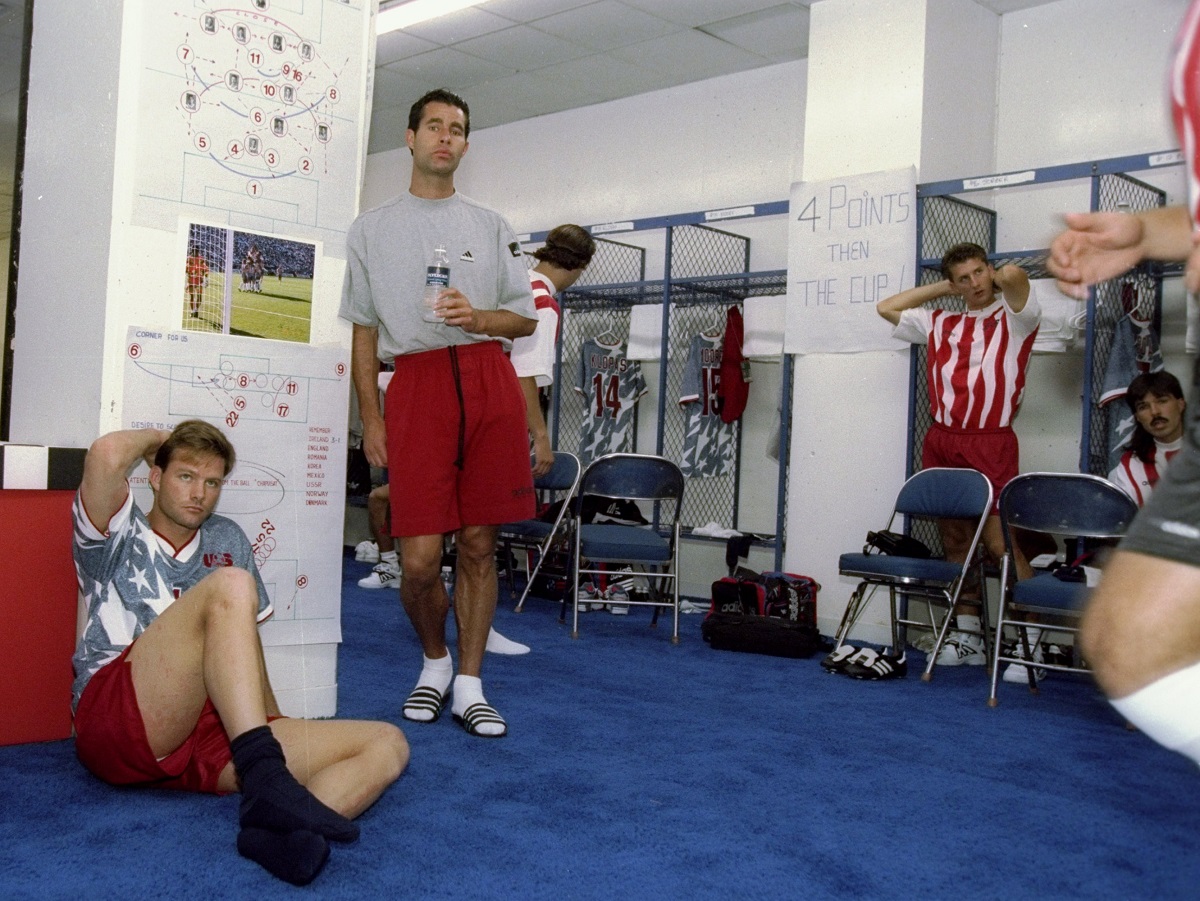
As the host country, the U.S. did not have to qualify for the tournament. Because most American players had few professional options, Milutinovic had most of his players in a permanent national team camp in Mission Viejo, Calif., for two years leading up to the World Cup.
ALAN ROTHENBERG, USSF president: The U.S. in 1990, it was almost a surprise that they qualified. It was really a bunch of college kids and a coach from a college program, and they were kind of overwhelmed with the step up. We were then handicapped as we prepared for 1994, because the world didn't have any respect for any of our players and virtually none of them could get jobs overseas.
ALEXI LALAS, defender: It was such a unique experience and unlike anything that has been done since or is done today. The majority of the team was in camp for basically two years leading up to the World Cup. Guys like myself and Cobi Jones, when we stepped on the field that summer, we had never even been on the books of any professional club team. We had only played international soccer so it was a very backwards way of doing things, but a necessity at the time.
BORA MILUTINOVIC, head coach: I think it was very important to have everyone on the same page, the coaching staff, people who worked in Mission Viejo, we decided to be there at this time. We didn't have a league, we didn't have anything.
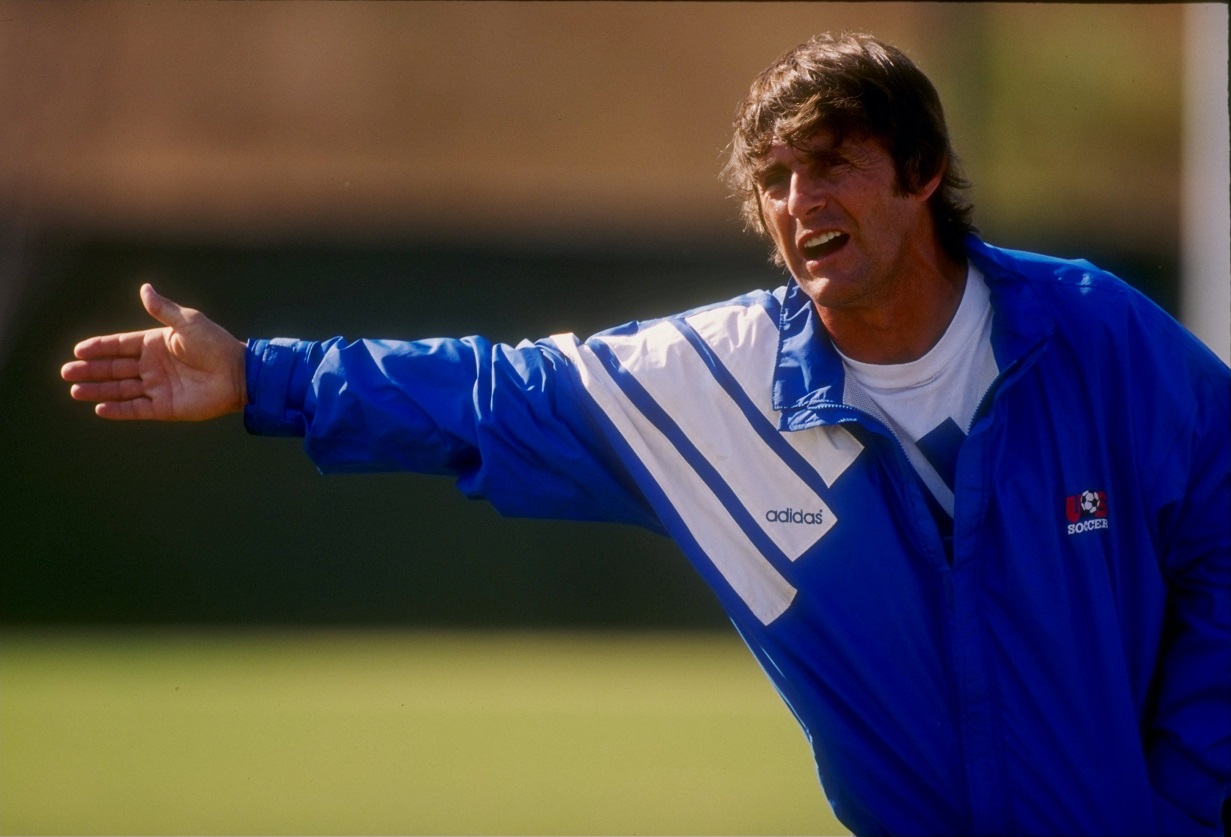 Bora Milutinovic coaches the USMNT in Mission Viejo. (Getty Images)
 LALAS: If you ask any national team coach today, the biggest frustration is that they don't get enough time with the players. I think Bora saw a unique opportunity to have the core of this team basically function as a club team — living and working together on a daily basis. And so all we did was tour around and play international games and just train in Mission Viejo.
PAUL CALIGIURI, defender: U.S. Soccer and Bora did a good job of bringing in a lot of players into the process, but at the same time keeping the core players together to create the continuity that was needed.
MARCELO BALBOA, defender: For most of us, that's all we had. A lot of us were not playing professional soccer in Europe at the time, so this was basically our professional team.
We trained twice a day, morning and afternoon, and then the federation would try to get as many friendlies as possible.
LALAS: We were on monthly contracts, so you could get fired at any time, and they paid for your apartment and you got some stipend or whatever it was. We weren't making that much money, but that was fine by me.
MIKE SORBER, midfielder: We trained twice a day, morning and afternoon, and then the federation would try to get as many friendlies as possible. It was all geared toward getting us prepared for competing against the best teams in the world.
TONY MEOLA, goalkeeper: I don't know the number of teams we played in that year-and-a-half, but it sure was a lot, it sure was a lot of traveling. I think that year, 1993, we were on the road over 250 days that year with Bora.
In 1993, the USA played 29 official international matches, which took place in the United States as well as Japan, El Salvador, Honduras, Saudi Arabia, Ecuador, Mexico, Iceland and Norway. The team would play an additional 15 friendlies in the first five months of 1994 leading into the World Cup.
Three weeks before the tournament, the U.S. brought in seven foreign-based players to add to the group in Mission Viejo: John Harkes (Derby County), Tab Ramos (Real Betis), Cle Kooiman (Cruz Azul), Earnie Stewart (Willem II), Roy Wegerle (Coventry City), Jürgen Sommer (Luton Town), and Eric Wynalda (FC Saarbrücken).
TAB RAMOS, midfielder: The guys that came in right at the end in the last three weeks, we weren't used to the trainings, we weren't used to the daily routine that all the other guys were used to, because basically the guys were all living there as if they were playing for a professional club, and then all of a sudden we come in.
ERIC WYNALDA, forward: That was a hard time because Bora had to make the final cuts, and Jeff Agoos and Chris Henderson and Dominic Kinnear were the last three, and that was rough because we were coming in and they were saying their goodbyes. They had worked so hard and they just didn't make the team and that was a rough couple of days.
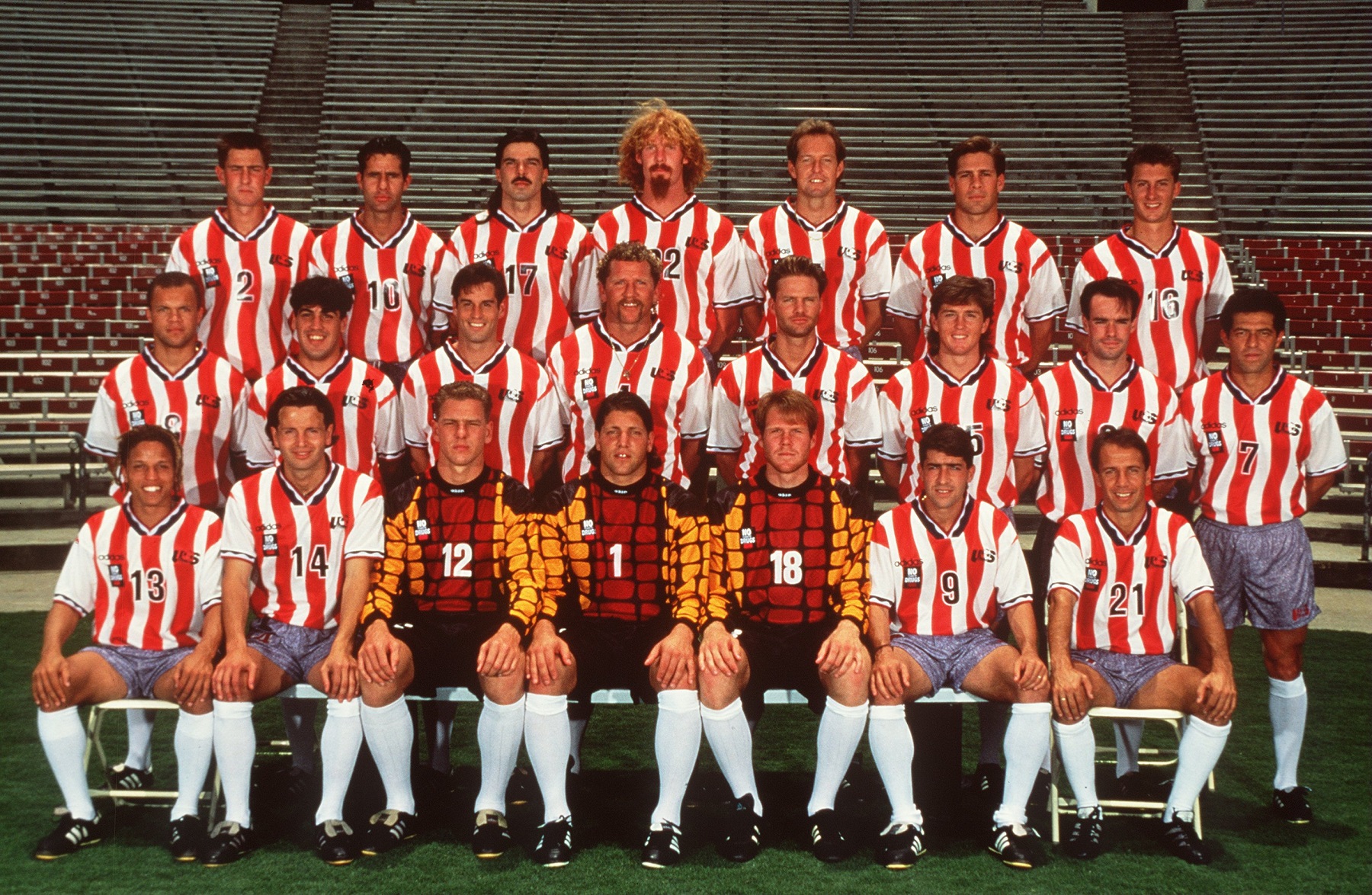 The final 22-man USMNT roster for the '94 World Cup. (Getty Images)
As Milutinovic and his team prepared on the field, the USSF, led by Rothenberg, was working to ensure the tournament would be the cultural and financial success that the nascent American soccer landscape desperately needed.
We came up with a mission statement and it was pretty bold, because we said we want to put on the greatest World Cup in history.
ROTHENBERG: Early on, we had a small group of executives at a retreat and we came up with a mission statement and it was pretty bold, because we said we want to put on the greatest World Cup in history. We added to the mission statement that we would leave a legacy for soccer in the United States and so at all times, we were trying to put on a phenomenal event that would be well received, but also use that to really create a lasting interest in soccer and to grow the sport.
JOHN HARKES, midfielder: As we know from history, the U.S. fans love events, and this was one that was going to be well attended. As it went through the tournament it built up momentum, and the energy was there and certainly the sponsors and the business side of things started to pick up.
ROTHENBERG: Any time we had an announcement of any kind, we made a big press conference out of it. Instead of just quietly having one announcement that said we're oversold, we did one after each day: New York just sold out, D.C. just sold out, Boston just sold out, and so there was a big story every day. The whole idea was to create in the public's mind that this was a hot ticket. Any time a new sponsor was added, we didn't just send out a press release, we made a big hoopla, we'd have a press conference.
MEOLA: All the sponsors were doing things in Mission Viejo because that's where the team was. A few of us filmed a MasterCard video that took a whole bunch of days after training.
CALIGIURI: One of the benefits of having the World Cup Committee based in Century City and having us in Mission Viejo was for the organization to have access to players to do either appearances or television interviews. That was key. The American public was beginning to buy what the World Cup was about and to identify with players.
WYNALDA: All of Alan Rothenberg's hard work went into it, because it really was his baby.
ROTHENBERG: We used every opportunity we could to create that hype. I remember at the final — it was Jim Gray at ESPN — he said to me, "Alan, let me ask you this, do you think all the hype was necessary? Did you know it would be a great event?" I said I was sure it would be a great event. I didn't know whether the hype was necessary, but I didn't want to take any chances.
Despite being a seeded team as the host, the USA was drawn into a very difficult Group A.
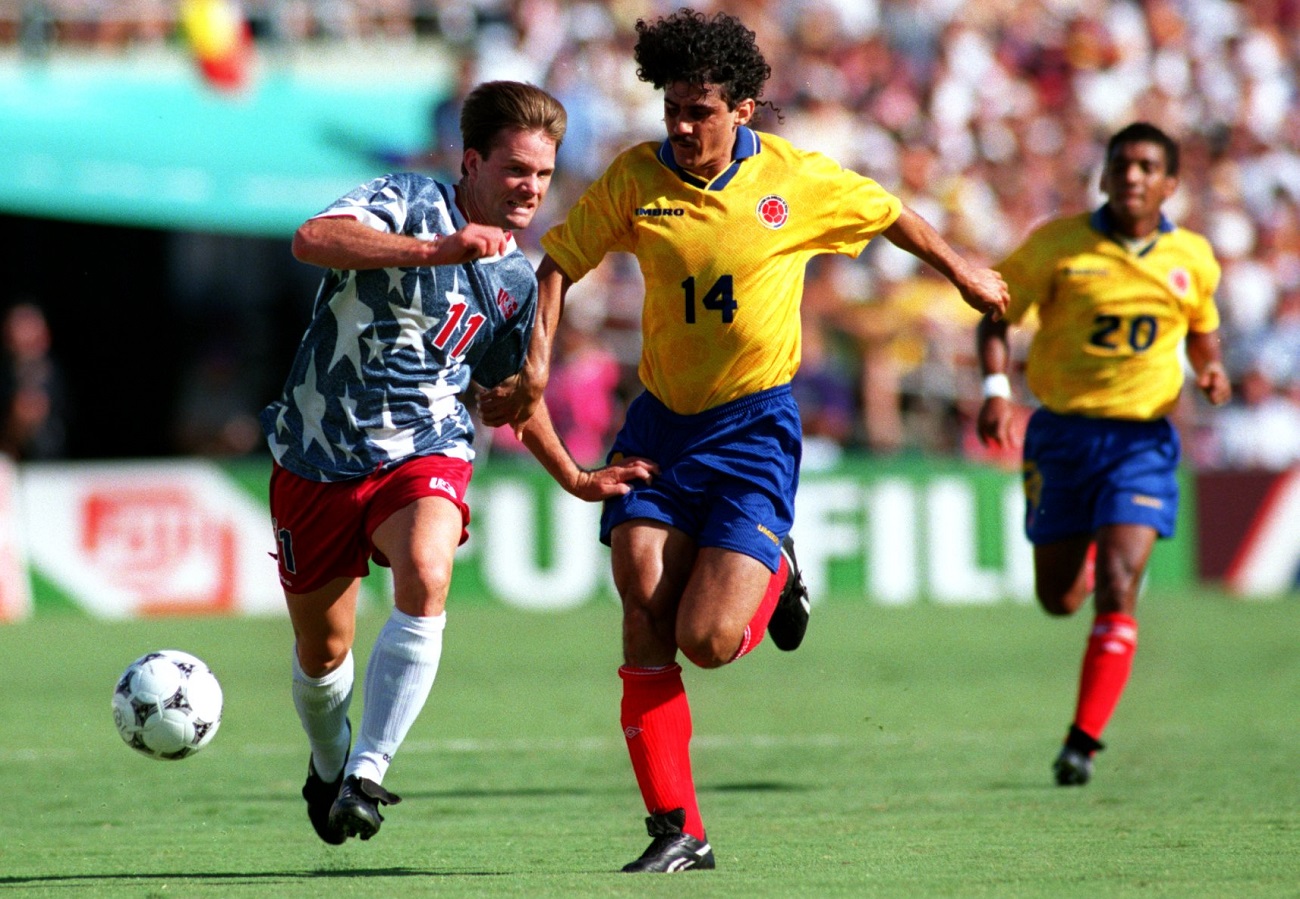
ROTHENBERG: Going into the tournament, Colombia was considered to be a really good dark horse to win it all. So the one team that we didn't want to get thrown into our group was Colombia, and lo and behold, our group turns out to be Colombia, Romania, and Switzerland. So we said, "We can beat Switzerland, we can sneak a tie from Romania and then we'll lose to Colombia and we'll sneak through and play past the group stage."
The U.S. was set to face Switzerland in both teams' World Cup opener on June 18. The game, played at the Silverdome in Pontiac, Mich., outside Detroit, would be the first-ever indoor World Cup match.
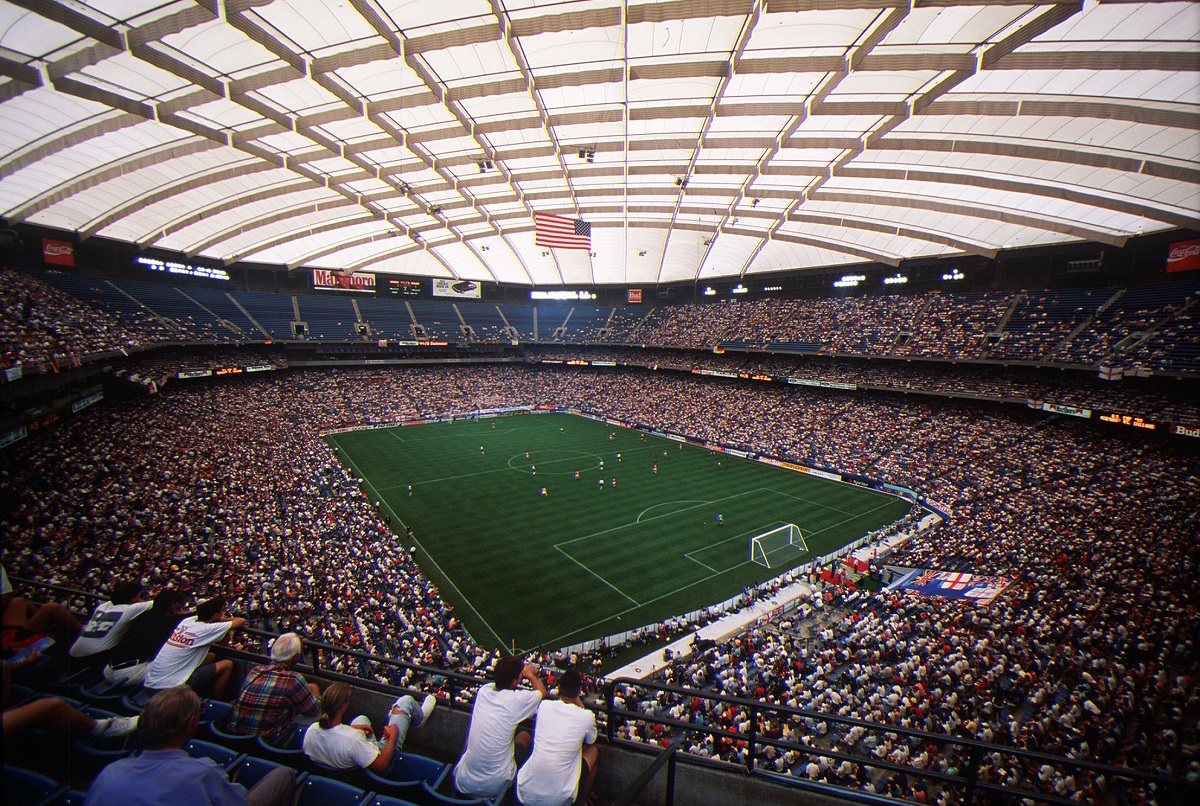 The Silverdome set-up for indoor soccer. (Getty Images)
 BALBOA: The night before Bora took us to the stadium with the lights off, and played a video for us in the stadium. We all kind of held hands and watched from one goal line to the halfway line.
MILUTINOVC: Normally the night before, you talk about the game tomorrow, but we had a great motivational movie about how we performed before. It was an 11-minute movie and we speak nothing about the game.
WYNALDA: I remember the video, I remember the song: "Right Now" by Van Halen. I didn't get it at first and then it was very cool. He had spent a lot of time editing just good thoughts to take into that game. I think we all were still trying to figure out a way to get a copy of that damn thing for the longest time.
HARKES: It was a little surreal. I think he kind of tried to grasp what was the best way to get us to be excited, and have this pumped up type of enthusiasm and positive feelings about ourselves, so it was great that he had put that together. The music choice? Well, we can always question that, but it was fun.
SIGI SCHMID, assistant coach: Bora was really insistent when he did those videos of making sure everybody's name appeared in the video at some point. It was like a subliminal type of thing. Then everybody's picture and them playing in action was in the video. He wanted everything to be hit three times, between your picture, you playing in action and your name.
CALIGIURI: The benefit I saw was we were able to go on the field. For me it was trying to visualize the atmosphere, what the stadium looked like, the sidelines, the width of the field, the dimensions, the texture, the grass.
WYNALDA: I found out we were going to the stadium, and it wasn't to practice, but I asked one of the kids that was with us, like kind of our ball boy ... I said, "Hey bring my shoes and a bag of balls because I want to practice free kicks." And so I actually stayed that night and hit a few, totally and completely against Bora's wishes. I only hit like 10 or 11, but I figured out that the ball would carry a little bit more than it would maybe in an outdoor facility.