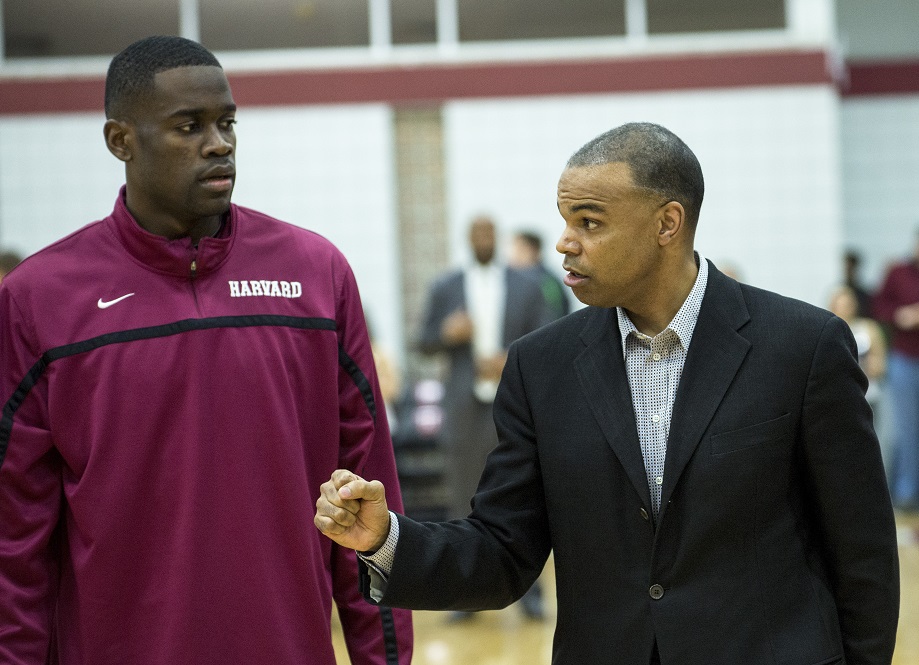
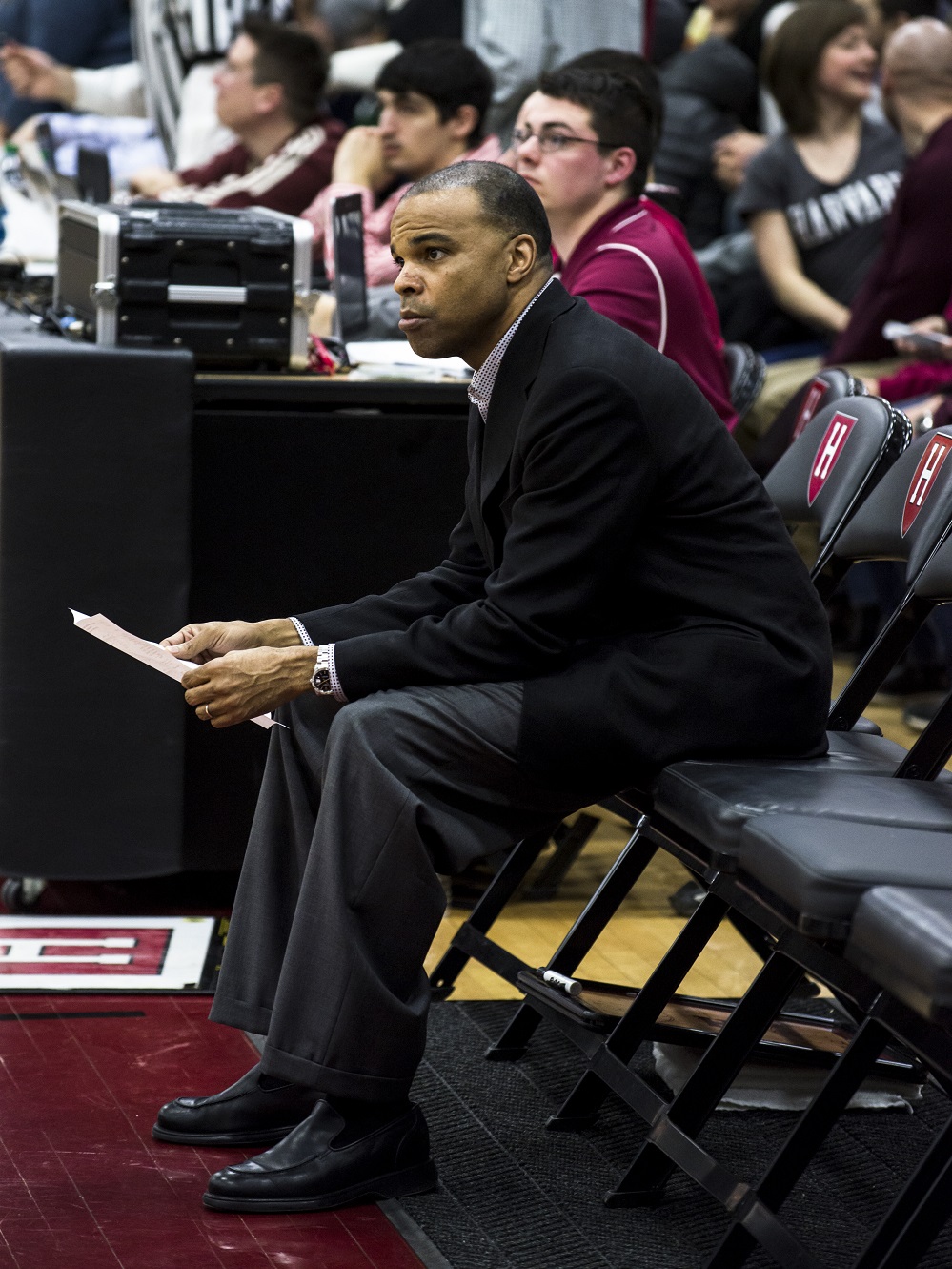
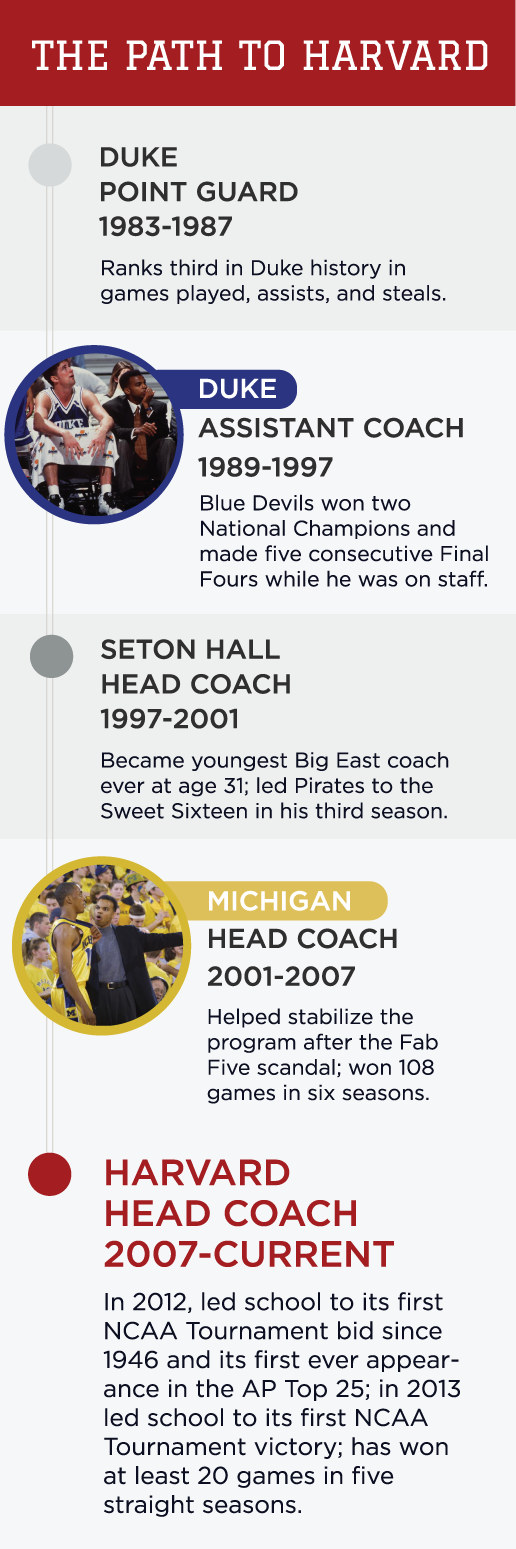
On a Saturday evening in February, Harvard men's basketball coach Tommy Amaker stood on the sideline of Lavietes Pavilion, the team's gym, with his arms across his chest. Clad in a dark blazer, slacks and an open-collared shirt, Amaker looked almost professorial.
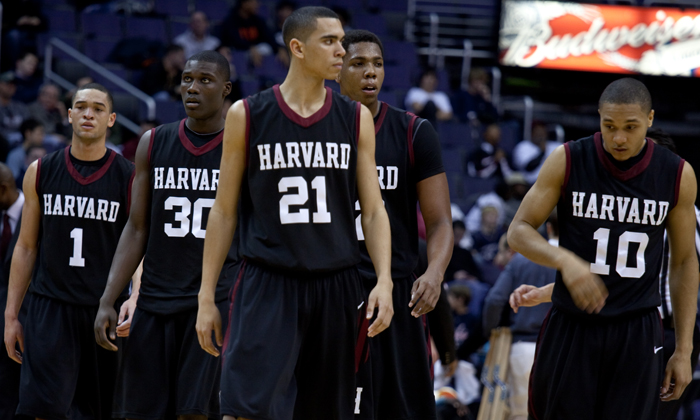
Judging by his expression, you would not know that his players were flunking their midterm against Yale. Harvard had trailed for almost the entire time and was now down by six points with less than two minutes to go. A win would have given Harvard a two-game lead in the Ivy League (no small feat in a conference which awards its automatic-NCAA tournament bid to the regular-season champion), but Harvard lost 74-67, shooting only 39 percent from the field as Yale's 6'8 forward Justin Sears (21 points, 11 rebounds) dominated.
When the buzzer sounded, Amaker walked down the sideline, shook hands with opposing coach James Jones, and patted him on the chest. He began his postgame press conference by congratulating the Bulldogs and emphasizing that, had his team won, he would have told his players that no one was going to award them any trophies.
But for Amaker, the path ahead was daunting. With eight games to go, six of which were on the road, Harvard was tied with the Elis, and an NCAA berth, which had once seemed likely, was at risk. The "horserace," as Amaker called it, was just beginning.
***
Two days later, on a blustery Monday afternoon, Amaker, now in a black Nike sweatsuit and sporting salt and pepper fuzz on his chin, sat in a leather chair in his office. Saturday night's loss was still on his mind.
"We were very hopeful that we could ... become a program here in our league that was thought of as a significant contender every year," says Amaker, who adds, while knocking on wood, "And up till today, that's what we've done."
On a coffee table is a copy of a recent story about the Harvard team entitled "The Startup" from Slam Magazine. "We viewed it as that, as an undervalued stock," says Amaker, who studied at Duke's Fuqua School of Business. "And how we were going to see if we could grow this and a lot of the folks who didn't jump on board were going to wish that they did."
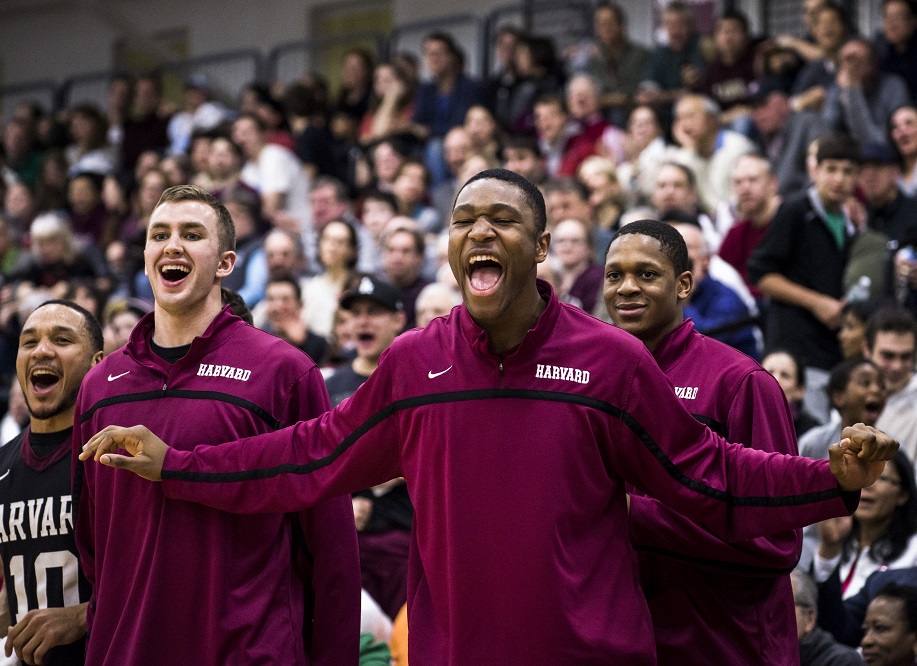
A look around the gym the previous Saturday suggested that quite a few people had bought what he was selling. Lavietes Pavilion, which only seats 2,195 people, but had been dormant before the team's resurgence, had been sold out and featured a raucous student section; two Boston Celtics, Kelly Olynyk and Phil Pressey, had trekked across town for the game; and faculty and staff from across the university, once loathe to be seen at a basketball game, were sitting courtside.
"I've been blown away," Amaker says to have so many "different people ... under the same roof. Under this roof," he repeats, gesturing upwards for emphasis, adding that he has been told that Harvard President Drew Faust described men's basketball games as "the most diverse event on Harvard's campus."
Asked why, in a business measured so strictly by wins and losses, connecting matters, Amaker pauses.
Then he leans forward, suddenly seeming larger than his 6-foot frame. "It just seems like when you connect, you become a much more powerful force in whatever you're trying to do," Amaker says, clasping his hands. "If there's a connection, a relationship, you can move mountains, and we've moved a few while we've been here."
 (Created by
 Howard Manly, left, and Charles Ogletree greet Tommy Amaker.